Author

admin

Browsing

Like its sister metal gold, silver has been attracting renewed attention as a safe-haven asset.

Although silver continues to exhibit its hallmark volatility, a silver bull market is well underway in 2025.

Experts are optimistic about the future, and as the silver price’s momentum continues in 2025, investors are looking for price forecasts and asking, “What was the highest price for silver?”

The answer reveals how much potential there is for the silver price to rise.

Read on for a look at silver’s historical moves, its new all-time high price and what they could mean for both the price of silver today and the white metal’s price in the future.

In this article

    How is silver traded?

    Before discovering what the highest silver price was, it’s worth looking at how the precious metal is traded. Knowing the mechanics can be useful in understanding why and how its price changes on a day-to-day basis and beyond.

    Put simply, silver bullion is traded in dollars and cents per ounce, with market activity taking place worldwide at all hours, resulting in a live silver price. Key commodities markets like New York, London and Hong Kong are just a few locations where investors trade the metal. London is seen as the center of physical silver trade, while the COMEX division of the New York Mercantile Exchange, called the NYMEX, is where most paper trading is done.

    There are two popular ways to invest in silver. The first is through purchasing silver bullion products such as bullion bars, bullion coins and silver rounds. Physical silver is sold on the spot market, meaning that to invest in silver this way, buyers pay a specific price for the metal — the silver price per ounce — and then have it delivered immediately.

    The second is accomplished through paper trading, which is done via the silver futures market, with participants entering into futures contracts for the delivery of silver at an agreed-upon price and time. In such contracts, two positions can be taken: a long position to accept delivery of the metal or a short position to provide delivery.

    Paper trading might sound like a strange way to get silver exposure, but it can provide investors with flexibility that they wouldn’t get from buying and selling bullion. The most obvious advantage is perhaps the fact that trading in the paper market means silver investors can benefit long term from holding silver without needing to store it. Furthermore, futures trading can offer more financial leverage in that it requires less capital than trading in the physical market.

    Market participants can also invest in silver through exchange-traded funds (ETFs). Investing in a silver ETF is similar to trading a stock on an exchange, and there are several silver ETFs to choose from. Some ETFs focus on physical silver bullion, while others focus on silver futures contracts. Still others focus on silver stocks or follow the live silver price.

    What is silver’s all-time high price?

    The silver all-time high was US$56.86, which it set on November 28, 2025.

    However, until October 9 of this year, the white metal’s all-time high had been the same for 45 years — silver’s former all-time high was US$49.95, and it was set on January 17, 1980.

    It’s worth unpacking what happened, because price didn’t exactly reach that level by honest means.

    As Britannica explains, two wealthy traders called the Hunt brothers attempted to corner the market by buying not only physical silver, but also silver futures — they took delivery of those silver futures contracts instead of taking legal tender in the form cash settlements. Their exploits ultimately ended in disaster: On March 27, 1980, they missed a margin call and the silver market price plunged to US$10.80. This day is infamously known as Silver Thursday.

    That record silver price wouldn’t be tested again until April 2011, when it reached US$47.94. This was more than triple the 2009 average silver price of US$14.67, with the price uptick coming on the back of very strong investment demand.

    So what happens next? While silver has officially broken its 1980 peak, it is still well below that price point adjusted for inflation. It remains to be seen just how high silver can go.

    Silver’s price history since 2011

    Silver price chart, November 10, 2010, to November 10, 2025.

    Chart via SilverPrice.org.

    After its 2011 peak, silver’s price pulled back over the following years before settling between US$15 and US$20 for much of the second half of last decade. An upward trend in the silver price started in mid-2020, when it was spurred on by the economic uncertainty surrounding the COVID-19 pandemic. The price of silver breached the key US$26 level in early August 2020, and soon after tested US$30. However, it failed to make substantial progress past that.

    In the spring of 2023, the silver price surged by 30 percent, briefly rising above US$26 in early May; however, the precious metal cratered back down to US$20.90 in early October. Later that month, silver advanced toward the US$23 level on the back of safe-haven demand due to the outbreak of the Israel-Hamas war.

    Following remarks from US Federal Reserve Chair Jerome Powell, speculation about interest rate reductions sent the price of silver to US$25.48 on November 30, its highest point for the fourth quarter.

    After starting 2024 on a low note, the white metal saw gains in March on rising Fed rate cut expectations. The resulting upward momentum led silver to reach a Q1 high of US$25.62 on March 20 before breaking through the US$30 mark on May 17. The silver price reached a then 12 year high of US$32.33 on May 20.

    In Q3, the metal’s price slid down below the US$27 mark to as low as US$26.64 by August 7 alongside its industrial cousin copper. Heading into Q4 2024, silver reversed course to the upside, tracking the record breaking moves in the gold price. Silver once again breached the US$30 level on September 13 and continued higher.

    On October 21, the silver price moved as high as US$34.20 during the trading day, up more than 48 percent since the start of the year and its highest level in 12 years. However, silver spent the rest of the year in decline, bottoming out at US$28.94 on December 30.

    Silver’s price performance in 2025

    Silver price chart, December 31, 2024, to November 28, 2025.

    The silver price experienced a momentum shift at the start of 2025, breaking through the US$30 barrier as early as January 5, and reaching US$31.31 by January 29. The metal continued to post gains through much of February and March, climbing to US$32.94 on February 20 and then peaking at its quarterly high of US$34.21 on March 28.

    Following US President Donald Trump’s tariff announcements on April 2, silver slumped to below US$30. While the Trump administration’s tariff policies have been largely beneficial for safe-haven assets like precious metals, there were concerns that the threat of tariffs could weaken industrial demand, which could cool price gains in the silver market.

    Yet those concerns were pushed to the back burner as recent economic and geopolitical events have raised analysts’ expectations of a September rate cut by the Fed. The benchmark rate has not changed since November 2024.

    On June 5, the silver price rose to a 13 year high of US$36.05 in early morning trading, before retreating toward the US$35.50 mark. By June 16, the white metal had broken through the US$37 mark for the first time since May 2011.

    In July, increasing geopolitical strife in the Middle East and Russia-Ukraine coupled with a positive outlook for China’s solar power industry proved price positive for both silver’s precious metals and industrial angles.

    The silver price overtook the US$39 level to reach US$39.24 on July 22.

    These same forces, coupled with the nearly unanimous rate cut expectations, launched the price of silver to over US$40 on August 31 for the first time since 2011, and by September 3 it had climbed as high as US$41.45. Silver continued climbing through September, progressively breaking level after level to top US$47 by the month’s end.

    Silver started Q4 by continuing its ascent, breaking through its 2011 peak and topping US$48 on October 3.

    The silver price officially surpassed its all-time US dollar high of US$49.95 — set in 1980 on October 9 — as it climbed to US$51.14 during trading that day. The white metal had already beaten its all-time highs in most currencies, including Canadian dollars and Australian dollars, on September 22.

    It continued climbing even higher on the safe-haven demand fundamentals behind its 2025 momentum. Helping drive that demand in October was escalating trade tensions between the US and China, leading to export controls on additional rare earth metals by China and threats of 100 percent tariffs on Chinese imports by the US.

    While silver pulled back to around US$48 in late October, news that the US government shut down had come to an end on November 9 drove the silver price back above US$50.

    Silver’s foray above the US$56 level on November 28 came on the back of an outage at the Comex, where trading was briefly halted due to a ‘cooling issue’ at a CyrusOne data center used by the exchange.

    Silver supply and demand dynamics

    Market watchers are curious as to whether the silver price will continue its upward trajectory in 2025. Only time will tell, and it will depend on the white metal’s ability to remain above the critical US$30 level.

    Like other metals, the silver spot price is most heavily influenced by supply and demand dynamics. However, as the information above illustrates, the silver price can be highly volatile. That’s partially due to the fact that the metal is subject to both investment and industrial metal demand within global markets.

    In other words, it’s bought by investors who want it as a store of wealth, as well as by manufacturers looking to use it for different applications that are incredibly varied. For example, silver has diverse technological applications and is used in devices like batteries and catalysts, but it’s also used in medicine and in the automotive industry.

    In terms of supply, the world’s three top producers of the metal are Mexico, China and Peru. Even in those countries silver is usually a by-product — for instance, a mine producing primarily gold or lead might also have silver output.

    The Silver Institute’s latest World Silver Survey, put together by Metals Focus, outlines a 0.9 percent increase in global mine production to 819.7 million ounces in 2024. This was in partly the result of a return to operations at Newmont’s (TSX:NGT,NYSE:NEM,ASX:NEM) Peñasquito mine in Mexico following a suspension of activity brought about by strike action among workers and improved recoveries out of Fresnillo (LSE:FRES,OTC Pink:FNLPF) and MAG Silver’s (TSX:MAG,NYSEAMERICAN:MAG) Juanicipio. Silver output also increased in Australia, Bolivia and the US.

    The firm is forecasting a 1.9 percent rise in global silver mine production to 823 million ounces in 2025. Much of that growth is expected to come out of Mexico, and it is also projecting output will rise in Chile and Russia.

    Lower production from Australia and Peru will offset some of these gains.

    Looking at demand, Metals Focus sees growth in 2025 flatlining as industrial fabrication takes a hit from the global tariff war. This could be tempered by an anticipated rebound in demand from physical investment in silver bars and coins.

    The silver market is expected to experience a substantial deficit of 117.6 million ounces in 2025, amounting to the sixth straight year of supply shortage for the metal.

    Is the silver price manipulated?

    As a final note on silver, it’s important for investors to be aware that manipulation of prices is a major issue in the space.

    For instance, in 2015, 10 banks were hit in a US probe on precious metals manipulation. Evidence provided by Deutsche Bank (NYSE:DB) showed “smoking gun” proof that UBS Group (NYSE:UBS), HSBC Holdings (NYSE:HSBC), the The Bank of Nova Scotia (TSX:BNS) and other firms were involved in rigging silver rates from 2007 to 2013. In May 2023, a silver manipulation lawsuit filed in 2014 against HSBC and the Bank of Nova Scotia was dismissed by a US court.

    JPMorgan Chase & Co. (NYSE:JPM) has been long at the center of silver manipulation claims as well. For years the firm has been in and out of court for the accusations. In 2020, JPMorgan agreed to pay US$920 million to resolve federal agency probes regarding the manipulation of multiple markets, including precious metals.

    In 2014, the London Silver Market Fixing stopped administering the London silver fix, which had been used for over a century to fix the price of silver. It was replaced by the LBMA Silver Price, which is run by ICE Benchmark Administration, in a bid to increase market transparency.

    Market watchers like Ed Steer have said that the days of silver manipulation are numbered, and that the market will see a significant shift when the time finally comes.

    Investor takeaway

    Silver has neared US$50 multiple times, including its all-time high, and as momentum continues for the silver price in 2025 investors are wondering if it could reach those heights once again.

    While it’s impossible to know for sure what’s next for silver, keeping an eye on the factors driving its performance, including gold’s performance, geopolitics, the economy and industrial demand, will help investors make decisions on when to buy and sell.

    Securities Disclosure: I, Melissa Pistilli, currently hold no direct investment interest in any company mentioned in this article.
    This post appeared first on investingnews.com

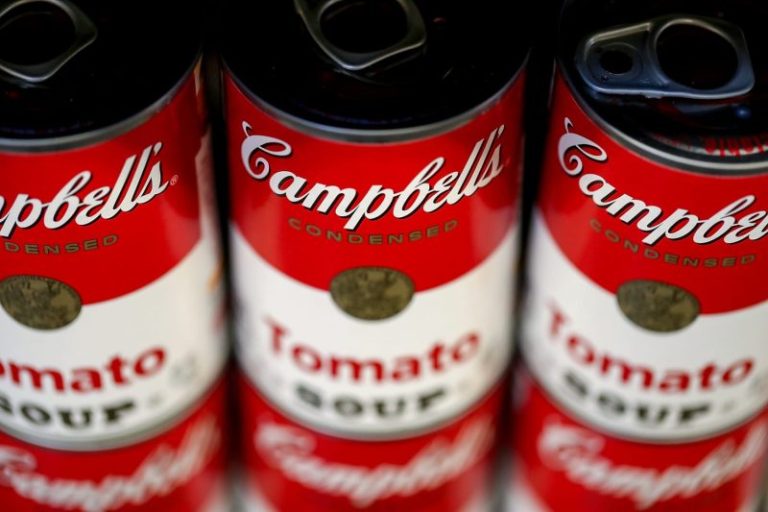
    Campbell’s has fired an executive accused of making racist comments and mocking its products and customers, the company announced on Wednesday.

    The termination follows a lawsuit filed in Michigan by former employee Robert Garza against Campbell’s, the company’s then-vice president of information technology Martin Bally and another manager.

    The complaint alleges retaliation and a hostile work environment, citing a November 2024 meeting between Bally and Garza to discuss salary, according to the lawsuit.

    Garza allegedly recorded the conversation, and the audio — obtained by NBC News — is more than 90 minutes long.

    During the interaction, the lawsuit alleges that Bally described Campbell’s as “highly process(ed) food” and said it was for “poor people.” He also allegedly made racist remarks about Indian workers, calling them “idiots.”

    ‘After a review, we believe the voice on the recording is in fact Martin Bally,’ Campbell’s said Wednesday. ‘The comments were vulgar, offensive and false, and we apologize for the hurt they have caused.’

    The company said it does not tolerate the language used in the audio recording and the behavior “does not reflect” its values.

    Campbell’s said it learned of the litigation and first heard segments of the audio on Nov. 20.

    Bally’s termination was effective Tuesday, the company said.

    According to the lawsuit, Garza told his manager, J.D. Aupperle — who is also named as a defendant, about Bally’s behavior in January 2025 and wanted to report the comments to the human resources department. He was not encouraged to report the comments, the lawsuit claims, and was then ‘abruptly terminated from employment’ later that month.

    ‘This situation has been very hard on Robert,’ Garza’s attorney, Zachary Runyan, said in a statement to NBC News on Tuesday. ‘He thought Campbell’s would be thankful that he reported Martin’s behavior, but instead he was abruptly fired.’

    Garza is seeking monetary damages from the company.

    Bally and Aupperle did not immediately return requests for comment on Wednesday.

    Campbell’s said it is ‘proud of the food we make’ and ‘the comments heard on the recording about our food are not only inaccurate — they are patently absurd.’

    This post appeared first on NBC NEWS

    Rapid Critical Metals Limited (‘Rapid,’ ‘RCM’ or ‘Company’) is pleased to announce that it has completed the acquisition of the Webbs Consol Silver Project (Webbs Consol) in northeast New South Wales, comprising EL 8933 and EL 9454 from Lode Resources Limited (ASX: LDR) (Lode Resources).

    The Board sees the acquisition of the Webbs Consol as a highly accretive strategic investment for Rapid which:

    • Builds critical mass to the Company’s existing Webbs and Conrad high grade deposits;
    • Secures a district-scale silver corridor by consolidating contiguous tenure across a high- grade silver belt in the New England Fold Belt;
    • Unlocks new discovery potential with adjoining tenure, increasing the likelihood of new discoveries between the two high grade silver deposits;
    • Consolidates ownership of three nearby, high-grade deposits supporting unified mine planning, centralised processing options, and potential operating synergies; and
    • Positions Rapid for growth with proximity to existing infrastructure and strong silver market fundamentals, providing a favourable backdrop for accelerated development.

    Commenting on the completion of the Webbs Consol acquisition, Byron Miles, Managing Director of Rapid, said:

    “The completion of the acquisition of the Webbs Consol builds on the Board’s strategy of becoming one of the ASX’s leading silver-focused growth Companies with a platform in New South Wales with significant potential for further growth.

    We have now secured a contiguous silver corridor with outstanding geological prospectivity and opened up exciting potential for new discoveries in the area.

    With a prospective portfolio of assets and a team focused on execution and delivery, we are well placed to accelerate exploration and development activities to create long-term value for our shareholders.”


    Click here for the full ASX Release

    This post appeared first on investingnews.com

    Corazon Mining Ltd (ASX:CZN) (‘Corazon’ or ‘Company’) is pleased to announce the granting of two key tenements at its Two Pools Gold Project (‘Two Pools’ or the ‘Project’) in the Gascoyne region of Western Australia (Figure 1).

    Highlights

    • Two core tenements at the Two Pools Gold Project have been successfully granted by the West Australian Department of Energy, Mines, Industry Regulation and Safety (DEMIRS).
    • Granting allows Corazon to expedite works to enable diamond drilling to commence in early 2026, pending completion of heritage surveys, and discussion with drilling contractors have commenced.
    • The initial program is designed to confirm high-grade historical results and provide essential structural controls on mineralisation.
    • Planning for follow-up Reverse Circulation (RC) drilling at Two Pools is also underway as part of the Company’s systematic exploration campaign.
    • The granting marks another key milestone in the Company’s positive operational reset over the past three months.

    The granting of Exploration Licences E52/4460 and E52/4468, which were vended into the Company as part of the Two Pools acquisition – represents a significant regulatory milestone. With tenure now secured, Corazon is moving immediately to finalise preparations for its maiden drill program.

    Corazon Mining Ltd Managing Director, Simon Coyle, commented: “The granting of these tenements is an important green light, allowing us to get boots on the ground at Two Pools. We are now moving quickly to secure a rig and finalise logistics to ensure we are drilling early in the new year. Our maiden diamond program is designed to give us a definitive look at the geology and structure of the high-grade zones, setting the stage for a systematic and aggressive exploration campaign throughout 202c.

    The reset of the Company over the last three months has been extremely positive and productive. With the team now fully operational and our key tenure granted, we look forward to the exceptional development of both Two Pools and Feather Cap Gold Projects in 202c.”

    Click here for the full ASX Release

    This post appeared first on investingnews.com

    The global pharmaceutical market is set to surpass a total value of US$1.75 trillion by the end of the decade, according to Evaluate Pharma.

    Experienced and novice investors alike may want to consider pharmaceutical exchange-traded funds (ETFs) as a way to gain exposure to the top pharma companies. Like all ETFs, pharmaceutical ETFs are a good option for those who want to trade a set of assets in the pharmaceutical industry instead of focusing solely on individual pharmaceutical stocks.

    The main advantage of a pharmaceutical ETF is the fact that it can provide exposure to an overarching sector, but still trades like a stock. Pharma ETFs also offer less market volatility and lower fees and expenses.

    Big Pharma ETFs

    Many of these funds have diverse holdings across some of the most important sectors in the pharmaceutical industry, including pain therapeutics, oncology, vaccines and biotechnology. Data was gathered on November 20, 2025.

    1. VanEck Pharmaceutical ETF (NASDAQ:PPH)

    Total assets under management: US$1.15 billion

    Established in late 2011, the VanEck Pharmaceutical ETF tracks the MVIS US Listed Pharmaceutical 25 Index. It has the capacity to provide big returns, even though there are some risks attached to the ETF. An analyst report indicates that investors looking for ‘tactical exposure’ to the pharma sector might consider this ETF as an investment option.

    The ETF has 26 holdings, with the top five being Eli Lilly (NYSE:LLY), Novartis (NYSE:NVS), Merck & Company (NYSE:MRK), Novo Nordisk (NYSE:NVO) and the McKesson (NYSE:MCK).

    2. iShares US Pharmaceuticals ETF (ARCA:IHE)

    Total assets under management: US$669.2 million

    Created on May 5, 2006, the iShares US Pharmaceuticals ETF tracks some of the top US pharma companies. In total, the iShares US Pharmaceuticals ETF has 45 holdings, with the vast majority being large-cap stocks.

    Of its holdings, Johnson & Johnson (NYSE:JNJ) and Eli Lilly are by far the largest portions in its portfolio, combining for nearly 50 percent, followed by Merck, Royalty Pharma (NASDAQ:RPRX) and Viatris (NASDAQ:VTRS).

    3. Invesco Pharmaceuticals ETF (ARCA:PJP)

    Total assets under management: US$299.48 million

    The Invesco Pharmaceuticals ETF is primarily focused on providing exposure to US-based pharma companies. An analyst report states that this ETF chooses individual securities based on certain investment criteria, namely stock valuation and risk factors.

    This ETF was started on June 23, 2005, and currently tracks 31 companies. Its top holdings are Eli Lilly, Amgen (NASDAQ:AMGN), Johnson & Johnson, Merck and AbbVie (NYSE:ABBV).

    4. State Street SPDR S&P Pharmaceuticals ETF (ARCA:XPH)

    Total assets under management: US$189.93 million

    The State Street SPDR S&P Pharmaceuticals ETF came into the market on June 19, 2006, and represents the pharmaceutical sub-industry sector of the S&P Total Market Index (INDEXSP:SPTMI).

    This pharma ETF tracks 52 holdings, with relatively close weighting among its holdings, a fact that sets it apart from other entries on this list. XPH’s top five holdings are Jazz Pharmaceuticals (NASDAQ:JAZZ), Tarsus Pharmaceuticals (NASDAQ:TARS), Eli Lilly, Ligand Pharmaceuticals (NASDAQ:LGND), and Crinetics Pharmaceuticals (NASDAQ:CRNX).

    5. KraneShares MSCI All China Health Care Index ETF (ARCA:KURE)

    Total assets under management: US$95.29 million

    The KraneShares MSCI All China Health Care Index ETF was launched in February 2018 and tracks an index of large- and mid-cap Chinese stocks in the healthcare sector, all weighted by market capitalization. According to an analyst report, the fund provides investors with ‘exposure to a relatively small slice of the Chinese economy.’

    The ETF tracks 50 holdings, and its top five are BeOne Medicines (NASDAQ:ONC), Jiangsu Hengrui Medicine (SHA:600276), Innovent Biologics (HKEX:1801), WuXi Biologics (HKEX:2269) and Sino Biopharmaceutical (HKEX:1177).

    Securities Disclosure: I, Melissa Pistilli, hold no investment interest in any of the companies mentioned in this article.

    This post appeared first on investingnews.com

    Investor Insight

    Heliostar offers a rare combination of immediate cash flow from two producing mines and a significant growth story driven by the high-grade Ana Paula development project. This blend of near-term production, strong margins and a robust pipeline positions the company as a compelling emerging mid-tier gold producer.

    Overview

    Heliostar Metals (TSXV:HSTR,OTCQX:HSTXF,FRA:RGG1) is an emerging mid-tier gold producer focused on unlocking high-grade gold production in Mexico’s premier mining regions.

    The company rapidly expanded its asset base by acquiring a diverse portfolio of producing and development-stage assets. This positions it for long-term, scalable production growth supported by both high-grade underground and large open-pit heap-leach operations.

    Heliostar now holds two producing mines – La Colorada and San Agustin, with combined production of 30,000 to 40,000 oz of gold – and is advancing the development of its flagship Ana Paula project. Two additional development assets in Mexico, Cerro del Gallo and San Antonio, in addition to exploration projects in North Sonora and Unga in Alaska complete Heliostar’s portfolio. This diversified platform enables the company to fund development through operating cash flow while continuing to expand its resource base.

    Heliostar prioritizes capital discipline and low-cost acquisitions, significantly expanding its asset base while maintaining a lean financial structure. With a growing operating cash flow, the company is reducing reliance on equity financing for development.

    The company is positioned for strong year-over-year production growth as San Agustin restarts in Q4 2025, La Colorada executes its updated 2025 mine plan, and Ana Paula advances toward construction and expected first production in 2028, following a positive underground PEA in November 2025 and an ongoing feasibility study. These milestones support the company’s strategy of building a multi-asset production base with increasing scale and margins.

    Looking ahead, the company has a long-term vision of achieving 500,000 ounces of gold production annually by 2030. This growth will be driven by the development of Ana Paula, followed by Cerro del Gallo and San Antonio, with continued exploration success and strategic acquisitions supplementing organic growth.

    Company Highlights

    • Heliostar Metals is rapidly advancing from a junior explorer to a mid-tier gold producer, targeting 150,000 oz per year in the near term and 500,000 oz annually by 2030.
    • Heliostar has rapidly expanded its portfolio with key acquisitions, now controlling two producing mines and three advanced-stage growth assets in Mexico. Added 3.5 million measured and indicated gold ounces for just US$15 million, reinforcing a capital-efficient growth model.
    • The company prioritizes capital discipline and low-cost acquisitions to expand its asset base and maintain a lean financial structure. Unlike many juniors that rely on dilution to grow, Heliostar leverages gold production cash flows to drive project development.
    • Annual gold production at La Colorada and San Agustin mines as of 2025 is between 30,000 to 40,000 oz, with mine operations earning $14.2 million in Q3 2025. Cash flow from these two mines funds Heliostar’s exploration and development without significant dilution.
    • CEO Charles Funk leads a seasoned team of mine builders and exploration experts with a track record of developing world-class deposits.
    • The company also features a favorable shareholder registry: 53 percent institutional investors, 42 percent high-net-worth and retail investors, and 5 percent held by the board and management.

    Key Projects

    Ana Paula (Flagship Development Project)

    Ana Paula is Heliostar’s flagship high-grade underground gold project located in the Guerrero Gold Belt, one of Mexico’s most prolific precious metals regions.

    The November 2025 underground PEA confirms Ana Paula as a low-cost, high-margin development opportunity with a nine-year mine life producing approximately 875,000 ounces of gold, averaging roughly 101,000 ounces per year after ramp-up. The project benefits from a wide, high-grade panel that continues to demonstrate strong continuity and exceptional grades, supported by a mineral resource of 710,920 ounces of measured and indicated gold at 6.6 grams per ton (g/t) and 447,500 ounces of inferred gold at 4.24 g/t.

    Heliostar has transitioned the project to an underground-only development plan to enhance economics, minimize surface disturbance and reduce capital intensity. The company is advancing engineering and permitting programs, including a permit amendment to convert the existing open-pit approval into an underground operation. A recently expanded 20,000-metre drill program is underway to upgrade inferred resources, expand the mineral envelope and support the ongoing feasibility study. Recent results included 83.2m grading 17.35 g/t gold from 76.0 m and 70.7 m grading 9.38 g/t gold from 49.65 m.

    Heliostar intends to advance the existing decline in 2026 to access underground drilling platforms and complete bulk sampling, enabling a construction decision shortly thereafter and positioning the project for first production in 2028. Ana Paula is expected to become the cornerstone asset underpinning Heliostar’s long-term production growth.

    La Colorada Mine

    La Colorada, located in Sonora, Mexico, is a fully operating open-pit heap-leach mine that underwent a major turnaround in early 2025. Mining was restarted in January 2025, and an updated October 2025 technical report outlines a significantly strengthened operation with a 6.1-year mine life and total production of 286,000 ounces of gold. The mine is expected to produce between 17,500 and 23,800 gold-equivalent ounces in 2025 at competitive cash costs and all-in sustaining costs, benefiting from strong gold prices and improved operational performance.

    La Colorada has meaningful opportunities for growth through drilling of the Veta Madre Plus area, which could add up to 28,000 ounces of additional near-surface resource, and the evaluation of the underground potential at El Creston, where deeper drilling has returned high-grade gold and silver intercepts. Further optimization of low-grade stockpiles also offers a route to additional production with minimal capital requirements. With its expanded reserves, improving margins and active exploration pipeline, La Colorada remains a key cash-flow generator and a vital contributor to Heliostar’s self-funded growth strategy.

    San Agustin Mine

    San Agustin is a heap-leach gold mine in Durango, Mexico, that produced approximately 14,700 ounces of gold in 2024 and continues to generate cash flow through stockpile processing in 2025. The mine is scheduled to restart active mining in the fourth quarter of 2025 following approval of the Corner Permit Area, with the restart plan outlining roughly 44,500 ounces of total gold production over a 1.2-year mine life. The restart requires just US$4.2 million in initial capital, funded entirely from Heliostar’s balance sheet, and delivers strong economics with significant leverage to higher gold prices. Beyond the restart, San Agustin provides meaningful growth potential through near-surface oxide expansion and deeper sulfide and breccia targets, where drilling has identified encouraging mineralization.

    Cerro del Gallo Project

    Cerro del Gallo is a large-scale, gold-silver development project in the Guanajuato district with 2.86 Moz of measured and indicated gold resources and an additional 1 Moz inferred. The project is advancing through permitting and a pre-feasibility study expected in Q4 2025, which is evaluating a long-life heap-leach operation targeting 80,000 to 100,000 ounces of annual gold production. With its scale, simple metallurgy and strong development profile, Cerro del Gallo represents a cornerstone growth asset supporting Heliostar’s strategy to expand production later this decade

    San Antonio Project

    San Antonio is an open-pit heap-leach development project in Baja California Sur hosting 1.74 million ounces of measured and indicated gold resources. A January 2025 PEA outlines robust economics, including 1.1 Moz of total production over 13 years, low AISC and an after-tax NPV5 of US$715 million at US$2,600 gold. The project is progressing through additional studies and environmental permitting and provides significant medium-term growth potential within Heliostar’s pipeline.

    Unga Project

    The Unga project in Alaska is a high-grade gold exploration asset, with an inferred resource of 384,000 oz gold (13.8 g/t). While not a primary focus, the project remains a long-term high-grade growth opportunity.

    Management Team

    Charles Funk – President & CEO

    Charles Funk brings over 18 years of experience in business development and exploration. Before joining Heliostar, he held senior roles at Newcrest Mining and OZ Minerals, two of the world’s most prominent mining companies. Funk led the Panuco discovery for Vizsla Silver in 2020, demonstrating his strong expertise in identifying and advancing high-potential gold and silver deposits. Under his leadership, Heliostar has pursued transformational acquisitions that have rapidly expanded the company’s asset base while maintaining capital efficiency.

    Gregg Bush – Chief Operating Officer

    A highly regarded mine builder, Gregg Bush has a strong track record in mine development, project integration, and operations management. He previously served as COO of Capstone Mining for nine years and as SVP of Mexico for Equinox Gold. With deep experience in Latin American mining operations, Bush plays a pivotal role in advancing Heliostar’s production assets, optimizing operations and ensuring efficient project execution.

    Sam Anderson – VP Projects

    Sam Anderson brings 20 years of experience in mine geology and project management, including 17 years at Newmont, where he served as mine geology superintendent and senior manager of exploration business development. He played a significant role in the development of Newmont’s Merian Mine in Suriname, from resource stage to steady-state operation. His expertise in mineral resource expansion and project evaluation is crucial to advancing Ana Paula and Cerro del Gallo toward production.

    Mike Gingles – VP of Corporate Development

    With over 35 years of corporate and entrepreneurial experience in the mining industry, Mike Gingles has been a key player in major mining deals. He led the Pueblo Viejo and Turquoise Ridge transactions for Placer Dome, two of the largest gold assets in North America. His expertise in strategic partnerships, corporate finance, and project acquisitions has positioned Heliostar for transformational growth.

    Hernan Dorado – VP Sustainability & Special Projects

    As a fifth-generation miner, Hernan Dorado has more than 20 years of experience in the mining sector, including a founding role at Guanajuato Silver, where he served as COO. He has extensive experience in Mexican mining operations, permitting and sustainability practices, ensuring that Heliostar’s projects meet the highest environmental and social responsibility standards.

    Vitalina Lyssoun – Chief Financial Officer

    Vitalina Lyssoun is a chartered professional accountant (CPA, CA) with over 16 years of financial expertise with a focus on the resource sector. She has strengths in Canadian and US public company reporting, regulatory and tax compliance, and internal controls. She is fluent in Spanish and has experience in operations based in Mexico, Central America and West Africa. Most recently, Lyssoun built and led the corporate accounting team at Gatos Silver, including through their recent merger with First Majestic Silver.

    Stephen Soock – VP Investor Relations & Development

    Stephen Soock has been in the mining industry for almost 20 years in both technical and capital markets roles. He has worked in various technical roles at mine sites across Canada, including Vale’s Thompson Nickel operation, Mosaic’s Belle Plaine solution potash mine and Rio Tinto’s Diavik Diamond mine complex. Prior to joining Heliostar, Stephen spent eight years as a sell-side research analyst covering growth and development companies in the junior precious metals space. He graduated from Queen’s University with a B.Sc. in Mining Engineering, is a CFA Charterholder, and a Brendan Woods ranked analyst.

    This post appeared first on investingnews.com

    Nevada Sunrise Metals (TSXV:NEV,OTCP:NVSGF) is a Nevada-focused exploration company with a portfolio spanning gold, copper and lithium projects. Nevada ranked as the world’s second most attractive exploration jurisdiction in 2024, providing a strong foundation for the company’s growth strategy.

    The Griffon Gold Mine project, a past-producing gold asset located within the prolific Battle Mountain–Eureka Trend. Griffon hosts Carlin-type mineralization, produced 62,661 ounces of oxide gold from 1998 to 1999, and benefits from extensive historical drilling, favorable host stratigraphy and new target zones identified by VRIFY’s DORA A.I. predictive modeling. Ongoing geophysics and geochemical programs in 2025 will refine drill targets ahead of a drilling program planned for 2026.

    Discovery Ridge Pit, Griffon Gold Mine Project, White Pine County, Nevada

    Nevada Sunrise integrates historical data with advanced geophysics, modern geochemical methods, and AI-driven exploration tools. This technology-enhanced approach, combined with experienced leadership and a strong technical team, is central to the Company’s strategy for building shareholder value.

    Company Highlights

    • Flagship past-producing gold project in a Tier-1 jurisdiction: The Griffon Gold Mine project lies within Nevada’s prolific Battle Mountain–Eureka Trend, near producing mines and major gold developers.
    • AI-powered exploration strategy: Nevada Sunrise is using VRIFY’s predictive modeling to identify high-priority drill targets, an emerging technology rarely applied in Nevada.
    • Clear path to 2026 drilling: Soil, magnetic, IP/resistivity and CSAMT surveys in fall 2025 will feed into an updated AI model, enabling optimized drill targeting planned for 2026.
    • Highly experienced management and geological team: Leadership includes executives and advisors with decades of exploration success across Nevada and globally.
    • Diversified asset portfolio: Gold, copper and lithium assets create optionality across multiple mineral markets.
    • Flagship past-producing gold project in a Tier-1 jurisdiction: The Griffon Gold Mine project lies within Nevada’s prolific Battle Mountain–Eureka Trend, near producing mines and major gold developers.
    • AI-powered exploration strategy: Nevada Sunrise is using VRIFY’s predictive modeling to identify high-priority drill targets, an emerging technology rarely applied in Nevada.
    • Clear path to 2026 drilling: Soil, magnetic, IP/resistivity and CSAMT surveys in fall 2025 will feed into an updated AI model, enabling optimized drill targeting planned for 2026.
    • Highly experienced management and geological team: Leadership includes executives and advisors with decades of exploration success across Nevada and globally.
    • Diversified asset portfolio: Gold, copper and lithium assets create optionality across multiple mineral markets.

    This Nevada Sunrise Metals profile is part of a paid investor education campaign.*

    Click here to connect with Nevada Sunrise Metals (TSXV:NEV) to receive an Investor Presentation

    This post appeared first on investingnews.com

    Here’s a quick recap of the crypto landscape for Monday (November 24) as of 9:00 p.m. UTC.

    Get the latest insights on Bitcoin, Ether and altcoins, along with a round-up of key cryptocurrency market news.

    Bitcoin and Ether price update

    Bitcoin (BTC) was priced at US$89,102.53, up 1.9 percent in 24 hours.

    The cryptocurrency is up after last week’s rout, which saw over US$1.2 billion in spot Bitcoin exchange-traded fund (ETF) outflows, marking the third consecutive week with over US$1 billion in outflows, as per SoSoValue.

    Bitcoin price performance, November 24, 2025.

    Chart via TradingView.

    However, market sentiment remains cautious, with the Fear and Greed Index reading 12 at market close. Increased open interest and large short liquidations suggest potential volatility and possible rebound dynamics.

    “In the short term, a rebound is highly likely, but if we fall again and lose the US$80,000 level, the probability of facing a much tougher period becomes significantly higher,” CryptoQuant said in a post on X.

    Bitcoin’s relative strength index at 58.52 indicates moderately bullish momentum, but is still comfortably below overbought territory. A -0.005 funding rate shows traders are still somewhat bearish, although short liquidations may start to shift momentum upward. Economic data due later this week could lift markets higher if it reinforces expectations of an interest rate cut from the US Federal Reserve. Market odds for a December rate cut have risen recently, with many sources placing the probability at around 70 to 79 percent.

    Meanwhile, ETH (ETH) was US$2,973.36, up by 5.1 percent in 24 hours. Liquidations of US$39.75 million, predominantly in short positions, may have fueled upward price pressure through a short squeeze.

    Open interest rose 3.07 percent to US$35.93 billion, suggesting increasing trader engagement and speculative activity in Ether derivatives. A funding rate of zero reflects a balance between bullish and bearish sentiment among traders.

    Altcoin price update

    • XRP (XRP) was priced at US$2.26, up by 9.2 percent over 24 hours.
    • Solana (SOL) was trading at US$138.82, up by 4.7 percent over 24 hours.

    Today’s crypto news to know

    Cardano chain split, Etherscan API outage highlight DeFi risks

    Recent events in the crypto ecosystem have underscored the vulnerabilities and institutional challenges facing DeFi investors. On November 21, Cardano experienced an accidental chain split triggered by a malformed transaction, temporarily dividing the blockchain into two competing chains.

    The disruption exposed weaknesses in network resilience and stake pool operations, causing lost block rewards and transaction irregularities in DeFi protocols dependent on Cardano’s network stability.

    Then, Etherscan unexpectedly cut off API access to roughly 10 percent of its blockchains and networks. This sudden outage occurred during the DevConnect conference, impairing developers’ ability to manage smart contracts effectively, further revealing how dependent DeFi investors are on the reliability of ancillary infrastructure.

    These events came amid growing tensions involving JPMorgan Chase (NYSE:JPM).

    The banking giant has drawn ire from the crypto community for reportedly influencing MSCI to exclude digital asset treasury companies holding more than 50 percent of their assets in cryptocurrencies.

    JPMorgan’s research warns that the exclusion could trigger forced selloffs potentially totaling up to US$8.8 billion, with Strategy (NASDAQ:MSTR) alone possibly facing US$2.8 billion in outflows.

    The final decision will be announced on January 15 ,with changes taking effect in February.

    The bank then upgraded ratings on Monday for Bitcoin-mining companies Cipher Mining (NASDAQ:CIFR) and CleanSpark (NASDAQ:CLSK) to overweight from neutral, citing strong momentum in high-performance computing partnerships and long-term cloud and colocation deals that improve revenue visibility.

    JPMorgan’s stance highlights the institutional and regulatory tensions complicating the interface between traditional finance and the fast-evolving crypto ecosystem.

    Franklin Templeton, Grayscale launch XRP ETFs

    The Franklin XRP ETF (ARCA:XRPZ) and the Grayscale XRP Trust ETF (ARCA:GXRP) both launched on Monday, providing new regulated investment options for XRP exposure.

    Investor response was prompt, with early trading volumes indicating strong demand and positive sentiment around XRP’s future prospects as reflected in the market’s reception to both ETFs.

    Market watchers see this dual launch as a major step toward integrating crypto assets like XRP into traditional finance frameworks, enhancing liquidity and investor confidence.

    Ray Youssef, CEO of peer-to-peer crypto app NoOnes, said a wave of altcoin ETF launches could bring a much-needed dose of optimism back into the market if investors interpret new listings as implicit regulatory approval.

    “As market sentiment has been so underwhelming in recent times, the ETF season hitting the market at its current condition may be when they can make the most significant contribution to the digital asset economy this year.”

    Youssef added that the launch of altcoin ETFs is creating a steady flow of capital into the digital asset market, providing a liquidity buffer. This momentum could lead to an end-of-year rally for altcoins.

    Burry debuts newsletter after Scion shutdown

    Michael Burry, best known for his prescient bet against the US housing market in 2008, has launched a paid Substack newsletter not long after closing his hedge fund, Scion Asset Management.

    In his introductory post, Burry emphasizes that the move does not mark a retirement, but rather a shift toward writing without the regulatory constraints that accompany professional money management.

    Priced at US$39 per month, the newsletter has quickly drawn more than 21,000 subscribers.

    Early essays revisit his trading history during the dot-com era and outline why he views today’s artificial intelligence boom as a supply-glutted bubble primed for correction.

    With Scion now closed, Burry says the newsletter will become his primary outlet for analysis as he continues to track what he views as speculative excess building across technology markets.

    Securities Disclosure: I, Giann Liguid, hold no direct investment interest in any company mentioned in this article.
    Securities Disclosure: I, Meagen Seatter, hold no direct investment interest in any company mentioned in this article.

    This post appeared first on investingnews.com