Author

admin

Browsing

Cobalt metal prices have trended steadily higher since September of last year, entering 2026 at US$56,414 per metric ton and touching highs unseen since July 2022.

The cobalt market staged a dramatic reversal in 2025, shifting from deep oversupply to structural tightening after decisive intervention by the Democratic Republic of Congo (DRC).

Prices began last year near nine year lows amid a lingering glut, but surged after the DRC, responsible for roughly three-quarters of global supply, imposed an export ban in February, later replaced by strict quotas.

By the end of the year, cobalt metal prices had more than doubled, underscoring how quickly supply-side policy reshaped market fundamentals. What emerged was not a demand-driven recovery, but a supply-led reset. Indonesian output, largely tied to nickel processing, helped cushion the shock but proved insufficient to replace lost Congolese units.

As inventories thinned and quotas capped future exports, the market exited 2025 near balance, setting the stage for a tighter and more volatile cobalt landscape heading into 2026.

Cobalt chokepoints: DRC dominance, China and the Lobito Corridor

With the concentration of cobalt output stemming from two nations, supply chain security has come into focus. An issue Roman Aubry, nickel and cobalt analyst at Benchmark Mineral Intelligence expects to last through 2026.

“2025 has demonstrated the risks associated with having a single country being

He added: “Looking ahead to 2026 it’s clear that the market has to anticipate continued uncertainty from the DRC. While they’ve announced a detailed quota system for the next two years, the DRC reserves the right to adjust it as it sees fit. Given the current ex-DRC cobalt stocks, Benchmark expects there to be significant risk of demand destruction as we approach the end of the year, therefore it is likely the DRC will need to adjust the export quota.”

Concern over China’s control of battery and critical metal supply chains is also likely to carry over through the year, as tensions between Washington and Beijing oscillate and the US looks to fortify its access to the metals.

Aubry pointed to the Lobito Corridor as a key factor in the US securing ex-China supply.

The major rail and port project linking the mineral-rich Copperbelt of the DRC and Zambia to Angola’s Atlantic coast, could reshape the global cobalt supply chain by lowering export costs, speeding transit times and diversifying routes away from China‑dominated infrastructure.

The US International Development Finance Corporation has committed hundreds of millions of dollars in funding to modernize the corridor’s rail and port facilities, potentially boosting annual transport capacity by an order of magnitude and cutting costs by as much as 30 percent compared with existing routes.

“In regards to Western-China relations, we’ve seen the US become increasingly conscious of its reliance on China refining for critical minerals, taking steps to improve ties with the DRC,” said Aubry. “This has mainly come in the form of a strategic agreement to develop the Lobito rail corridor, which would allow the DRC to export cobalt directly to the Atlantic, as well as the establishment of a coordinated Strategic Minerals Reserve within the DRC.”

Is cobalt substitution in the cards?

Before the DRC levied export controls over cobalt exports human rights and child labour concerns around artisinal cobalt extraction plagued the sector.

Paired with the supply chain challenges, battery manufacturers began shifting chemistry away from cobalt-rich formulas, like nickel-cobalt-manganese (NCM) and lithium-iron-phiosphate (LFP) began growing in market share.

In 2025, demand for nickel-cobalt-manganese (NCM) battery cells remained strong in markets focused on longer driving range and performance, particularly in North America and Europe, but lithium iron phosphate (LFP) cells continued their rapid ascent, driven by cost advantages and growing adoption in China and entry-level electric vehicles (EVs).

Industry forecasts project LFP’s share of global battery cell capacity to exceed 60 percent in 2025, reflecting broader shifts toward lower-cost chemistry amid affordability pressures, while NCM and lithium nickel cobalt aluminum oxide (NCA) cells continue to dominate premium segments where energy density remains critical.

Amid a shrinking EV market share, Aubry pointed to overall growth in the EV segment, as well as cobalt’s other end uses as factors likely to support demand.

“While battery chemistries are expected to shift towards lower-cobalt or cobalt- free chemistries, the volume of EV batteries is expected to more than offset this,” he explained.

“From all applications, cobalt demand is expected to grow almost 80 percent in the next decade,

He added: “Outside of the EV space, portables are an area of significant growth, particularly batteries for newer technologies like drones. Industrial applications also present a stable source of growth.”

Market volatility drives need for raw materials hedging

During a presentation at Benchmark Week 2025, Casper Rawles, COO at Benchmark Intelligence, highlighted the growing value of hedging for companies operating in the battery raw materials space.

According to Benchmark data, raw materials could account for 20 percent to 40 percent of battery costs by 2030, exceeding 50 percent for some chemistries.

For EV manufacturers such as BYD (OTCPL:BYDDF), annual spending on critical battery materials could exceed US$2 billion, leaving margins highly exposed to price swings.

Against that backdrop, Rawles underscored the need for more sophisticated hedging strategies, noting that shifts in sentiment, supply, demand and geopolitics can reprice these markets with little warning.

Hedging allows companies to manage commodity price volatility by offsetting exposure in the physical market with positions in the futures market.

Producers and consumers typically hedge either to lock in prices that protect margins or to secure fixed pricing tied to external contracts, buying or selling futures to counterbalance their underlying risk. In practice, firms can tailor these strategies to reduce price exposure partially or eliminate it altogether, depending on their risk tolerance.

As Rawles explained, cobalt’s 2025 price rebound emphasizes how exposed the market is to geopolitics, with the DRC’s export controls triggering a rapid reversal from oversupply to scarcity.

“Ultimately we saw an export quota being put in place. Now that quota is pretty limited,’ said Rawles.

‘When we think about the type of volumes we’re expecting to be needed by the market it’s really not going to be sufficient to fulfill market demand. That really shows how quickly the fortunes of these minerals can change,” he added, noting that the DRC’s dominance gives it outsized influence over global pricing.

Rawles stressed that cobalt volatility is no longer driven by supply and demand alone, but by sentiment and geopolitics, with major implications for battery makers and automakers, where raw materials account for a large share of costs.

“Even if you think you know the outlook at the start of the year, that can change in a heartbeat,” he said.

Securities Disclosure: I, Georgia Williams, hold no direct investment interest in any company mentioned in this article.

This post appeared first on investingnews.com

The graphite market was dominated by oversupply, trade disputes and China’s continued grip in 2025.

Prices hit multi-year lows as a US investigation into Chinese anode imports highlighted the vulnerability of the electric vehicle (EV) supply chain, with tariffs and anti-dumping duties creating uncertainty for North American producers.

Although natural graphite output has risen from 966,000 metric tons in 2020 to 1.6 million metric tons in 2024, China accounts for nearly all recent supply growth and also dominates refining.

The nation is projected to control roughly 80 percent of battery-grade graphite production through 2035.

Outside the Asian nation, analysts note that US and European producers face high costs and limited alternatives, with trade tensions and tariffs further constraining non-China supply.

While graphite projects in Madagascar and Mozambique offer some diversification of supply, graphite refining capacity remains heavily concentrated, leaving the market exposed to supply shocks.

A US-China trade agreement made late in 2025 eased volatility in the natural anode market, but oversupply and weak demand continue to pressure flake graphite prices as the year closed.

“The agreement between the US and China to roll back planned export restrictions on markets such as graphite is set to provide a stable picture for the next year,” wrote Fastmarkets’ Andrew Saucer in a November update.

“However, for graphite, it leaves many existing trade barriers in place which should solidify shifts in how China and the US are finding alternatives to each other in their natural and synthetic supply chains.’

Graphite prices under pressure

Speaking at the Benchmark Week conference in November 2025, Adam Webb, head of energy raw materials at Benchmark Mineral Intelligence, explained why flake graphite prices — as well as the majority of the battery metals suite — saw weak prices through early 2025, despite a promising demand outlook.

“Essentially, what’s happened here is demand has grown very strongly, but supply growth has actually outpaced demand growth,” Webb said. “Therefore you’ve got the markets in a surplus, and that weighs on prices.”

As graphite prices sank in 2024, a ripple effect impacted supply, hitting the production side hard.

“With flake graphite, you’ll notice it’s actually supply has increased less than demand, and that is because prices were so low that in 2024 you had significant Chinese capacity come offline,’ Webb commented.

‘Also in flake graphite you have competition with synthetic graphite.”

Graphite anodes remain the dominant choice for lithium-ion batteries, but price divergence has sharpened competition between natural and synthetic materials.

Synthetic graphite is expected to retain the largest market share in the near term, thanks to its superior fast-charging performance, durability and electrolyte compatibility. However, natural graphite is gaining attention for its lower cost, higher capacity and lower energy intensity. This competition has divided the market as prices for flake graphite remain low, further pressured by weak demand in the industrial segment.

“Flake pricing on the other hand continues to feel the impact of lower steel demand in 2025 amid declines in Asian and European production in the first seven months of the year,” a September Fastmarkets report notes.

“Expectations among market participants are that production in China will continue to decline through the end of the year and continue to weigh on overall global production.”

Energy storage surge to underpin long-term graphite demand

Despite the market challenges noted by Benchmark’s Webb, the metals consultancy and price reporting agency forecasts 9 percent growth in graphite demand between 2025 and 2035.

This uptick will be strongly supported by a rise in the EV and battery energy storage system (BESS) segments.

“Flake graphite, you’ll see that that price is going up despite the oversupplied market, and that is because to meet that rising demand, there needs to be more supply coming online, and a lot of that supply coming online is high cost. So that’s going to push up the price support, basically, gradually through time,” Webb said.

The BESS market emerged as a major growth driver in 2025, reinforcing long-term demand for battery raw materials, including graphite. As Benchmark outlines, the market for BESS is expected to register roughly 44 percent growth for 2025, almost double the rate of overall lithium-ion battery demand.

As a result, energy storage is set to account for a quarter of total battery demand in 2025.

In North America, momentum has been uneven.

While interest in large-scale storage remains strong, BESS integrators faced mounting pressure in 2025 due to limited domestic battery cell supply, project delays and shrinking margins.

Several leading system providers reported weaker financial results, highlighting the risks of heavy reliance on imported cells and fragmented supply chains.

In Europe, deployed energy storage capacity surpassed 100 gigawatts by November, with batteries accounting for the vast majority of new installations. China, by contrast, saw a renewed surge in energy storage battery shipments. Policy reforms introduced under “Document No. 136” shifted renewable power toward market-based pricing and removed mandatory storage requirements, allowing battery projects to compete on commercial returns.

Together, these regional dynamics underline the growing importance of stationary storage in the global battery market. As BESS capacity expands alongside EVs, demand for graphite anodes is expected to remain structurally strong, even as supply chains and pricing face continued adjustment.

Establishing an ex-China anode supply chain

At Benchmark Week, industry insiders agreed graphite demand will continue to rise through the decade, but the anode supply chain remains constrained by China’s dominance and the high cost of building alternatives elsewhere.

Today, more than 90 percent of battery-grade anode material is sourced from China, a concentration that has become increasingly untenable for western automakers and cell manufacturers.

“Customers are actively looking for diversification,” said Michael O’Kronley, CEO of Novonix (ASX:NVX,OTCPL:NVNXF), noting that supply security has shifted from a long-term aspiration to an immediate priority.

Yet replacing Chinese supply is proving far from straightforward.

A panel featuring graphite executives highlighted that anode qualification can take years, requiring extensive testing to ensure materials perform consistently over a battery’s full lifespan.

“Battery materials aren’t qualified overnight,” O’Kronley said. “It takes years of co-development and patient capital.”

Cost remains the central obstacle. Building an anode plant in North America can cost three to 10 times more than in China, while customers remain reluctant to pay a premium. “A new supply chain has to be paid for somewhere,” O’Kronley warned, arguing that government support is essential if diversification is to scale.

Natural graphite producers face similar pressures.

Financing has become more difficult amid weak prices, even as long-term demand expectations remain strong.

“We expect demand growth closer to 2030,” said Patrice Boulanger, vice president of sales, marketing and business at Québec-focused Nouveau Monde Graphite (NYSE:NMG), adding that government offtake agreements are increasingly critical to unlocking private financing.

Despite growing interest in silicon, lithium metal and other next-generation anodes, the panelists were unanimous that graphite will remain dominant.

“Graphite is clearly here to stay,” said Viren Hira of Syrah Resources (ASX:SYR,OTCPL:SYAAF), with both natural and synthetic materials expected to underpin battery growth through at least the next decade.

Adding context during his own presentation at Benchmark Week, Webb outlined how cost dynamics are reshaping the anode market, particularly the balance between synthetic and natural graphite.

“On the anode side, we’ve seen a move towards synthetic graphite,” he said, noting that the shift has been driven less by performance and more by economics. Producers, he explained, have increasingly turned to lower-quality, lower-cost feedstocks, enabling them to reduce production costs.

As a result, prices for synthetic anode material have fallen, making it more competitive and supporting its growing share of battery anode demand.

Securities Disclosure: I, Georgia Williams, hold no direct investment interest in any company mentioned in this article.
This post appeared first on investingnews.com

Exploration drilling underway and PFS-level technical programs ongoing at the Company’s Saskatchewan gold project

Fortune Bay Corp. (TSXV: FOR,OTC:FTBYF) (FWB: 5QN) (OTCQB: FTBYF) (‘Fortune Bay’ or the ‘Company’) is entering 2026 with a strengthened balance sheet and a clear strategic focus on advancing its Goldfields Gold Project (‘Goldfields’ or the ‘Project’), a gold development asset in Saskatchewan, one of the world’s top-tier mining jurisdictions.

Following a year of significant technical and corporate progress in 2025, the Company is fully funded to execute its planned 2026 program at Goldfields, centered on; 1) project development work, that includes advancing toward a Prefeasibility Study (‘PFS’) in tandem with permitting activities, and 2) exploration drilling targeting additional near-mine ounces that could further strengthen Goldfields’ excellent economics. Exploration drilling has resumed after the holiday break and initial drill results are expected in the first quarter of 2026.

Goldfields is very well-positioned for advancement, with excellent PEA economics, a high-confidence mineral resource base, established infrastructure, and the benefit of Saskatchewan’s stable, top-tier jurisdiction.‘ said Dale Verran, CEO of Fortune Bay. ‘The work completed in 2025 strengthened the project’s technical foundation and firmly set the stage for expedited advancement. With funding secured, our priority in 2026 is disciplined execution, advancing development while growing the resource and positioning Goldfields to unlock meaningful value as the gold market continues to strengthen.’

2025: A Year of Demonstrating Project Value and Setting the Stage for Advancement

Throughout 2025, Fortune Bay advanced Goldfields through a series of key milestones aimed at strengthening technical confidence, improving execution readiness, and positioning the project for the next stage of value creation.

Updated Preliminary Economic Assessment: Defining an Expedited Development Path

In September 2025, Fortune Bay completed an independent Updated Preliminary Economic Assessment (‘Updated PEA’) for Goldfields, confirming the project as a robust open-pit development asset supported by a well-defined resource base, existing infrastructure, and Saskatchewan’s stable regulatory environment.

At a base-case gold price of US$2,600/oz, the Updated PEA outlined after-tax economics of C$610 million NPV (5%) and a 44% IRR, with initial capital estimated at C$301 million. At spot gold prices at the time of the study (US$3,650/oz), the after-tax NPV (5%) increased to C$1.25 billion, highlighting the project’s strong sensitivity to gold prices. On average, every US$100 change in the gold price assumption results in an approximate C$61 million change in after-tax NPV.

The Updated PEA positions Goldfields for accelerated advancement toward construction by maintaining throughput below 5,000 tpd, enabling the Project to remain within the provincial permitting framework. This expedited pathway is supported by established infrastructure, a de-risked resource base (with 97% of ounces in the mine plan classified as Indicated), and a valid provincially approved Environmental Impact Statement (‘EIS’) from 2008 for a 5,000 tpd open-pit operation.

To read the full release visit https://fortunebaycorp.com/news/post/fortune-bay-announces-updated-pea-for-goldfields-saskatchewan.

Permitting Work: Advancing Execution Readiness

Alongside the Updated PEA, Fortune Bay advanced environmental baseline studies during 2025, building upon extensive historical datasets and the existing EIS. Both aquatic and terrestrial baseline environmental studies were completed in late 2025, with final reporting and ongoing monitoring continuing into early 2026 and beyond.

In addition, a well-attended community tour of Indigenous communities and municipalities was completed in November 2025 to support early engagement on the development of Goldfields. Productive meetings were also held with Chiefs and Council members from local Indigenous nations to introduce the project and seek initial feedback from leadership.

Post-PEA Technical Programs: Advancing Toward PFS-Level Studies

Following completion of the Updated PEA, the Company initiated a series of post-PEA technical programs aimed at further de-risking the project and advancing studies toward the PFS level. This work included high-resolution topographic (LiDAR) survey, waste rock characterization, metallurgical testwork, and planning for additional PFS-level work programs.

Exploration: Positioning for Resource Expansion

In parallel with project development work, Fortune Bay refined exploration targets across the Goldfields property, integrating historical drilling, updated geological modeling, and insights gained through the PEA process. This work directly informed the design of the current exploration drilling program targeting additional near-mine ounces that could further strengthen Goldfields’ exceptional economics and improve the overall development profile. 

2026: Funded, Focused, and Advancing

With funding secured, Fortune Bay’s 2026 work program is designed to translate the technical and permitting progress achieved in 2025 into tangible value advancement at Goldfields. The Company enters the year with a clear operational focus and the financial capacity to execute its plans without near-term capital constraints.

Exploration

A central component of the 2026 program is resource expansion drilling, targeting priority areas identified through recent geological modeling and insights gained from the Updated PEA. The drilling is intended to test the potential to further strengthen project scale, extend mine life, and enhance the overall development profile. Initial drill results are expected in the first quarter of 2026.

Project Development

The Company plans to advance three key project development strategies in parallel; 1) PFS-level work streams, 2) Saskatchewan-led environmental approvals, and 3) community consultation and engagement.

PFS-level work streams will include expanded geotechnical, metallurgical and waste rock geochemistry investigations. Metallurgical and waste rock studies in 2025 were scoped to inform and support design of optimized PFS-level investigations in 2026. An integrated work program is being developed to reduce the amount of drilling required to the extent possible.

  • Geotechnical drilling and investigations, in tandem with hydrogeological survey, will expand on historical studies to further characterize host-rock physical properties and support optimization of the open pit design. Surface investigations and soil profile testing will also be carried out to support higher-confidence infrastructure design, including that of the tailings storage facility, process plant and other site infrastructure.
  • Metallurgical studies will include expanded testing to better constrain parameters around process plant design and reagent consumption, including broad-scale variability testing.
  • Waste rock characterisation study will be carried out, including acid base accounting and geochemistry, to support waste rock facility design and complement site water balance and environmental (permitting) advancement.

Results from recent baseline environmental studies and the waste rock characterization program will be integrated with feedback from early engagement activities and the project scope outlined in the Updated PEA to inform development of the Technical Proposal. The Technical Proposal is the first step in the provincial environmental assessment process and will be used as a basis for initiation of regulatory engagement with the Saskatchewan Ministry of Environment in Q1 of 2026. This work will build upon the Provincially-approved 2008 Environmental Impact Statement for a 5,000 tpd open-pit operation. Community engagement will continue in 2026 to strengthen relationships and continue meaningful dialogue on the project with the public and local Indigenous Nations, including rights holders.

The technical progress achieved at Goldfields in 2025, and the fully funded program planned for 2026, reinforce the Company’s strategy of disciplined, cycle-aware advancement of a high-quality gold asset in a top-tier jurisdiction.

Technical Report & Qualified Person

Details for the Updated PEA for Goldfields are provided in the technical report titled ‘Goldfields Project Updated NI 43-101 Technical Report & Preliminary Economic Assessment, Saskatchewan, Canada‘, dated October 20, 2025, prepared by Kevin Murray, P.Eng.; Scott C. Elfen, P.E.; James Millard, P.Geo.; Jonathan Cooper, P.Eng.; Marc Schulte, P.Eng.; Cliff Revering, P.Eng.; and Ron Uken, Pr.Sci.Nat. for Fortune Bay Corp. The technical report is available under the Company’s issuer profile on SEDAR+ (www.sedarplus.ca) and on the Company’s website at www.fortunebaycorp.com.

The technical and scientific information in this news release has been reviewed and approved by Gareth Garlick P.Geo., Vice-President Technical Services of the Company, who is a Qualified Person as defined by NI 43-101. Mr. Garlick is an employee of Fortune Bay and is not independent of the Company under NI 43‑101.

About Fortune Bay

Fortune Bay Corp. (TSXV:FOR,OTC:FTBYF; FWB:5QN; OTCQB:FTBYF) is a Canadian mineral exploration and development company with assets in Canada and Mexico. The Company’s primary focus is advancing the Goldfields Gold Project in Saskatchewan, Canada. Fortune Bay also holds the Poma Rosa Gold-Copper Project in Chiapas, Mexico, as well as an optioned uranium project portfolio in the Athabasca Basin of Saskatchewan. Fortune Bay continues to evaluate and advance its portfolio in a disciplined manner while maintaining a strong technical foundation and prudent capital management. For more information, please visit www.fortunebaycorp.com or contact info@fortunebaycorp.com.

On behalf of Fortune Bay Corp.

‘Dale Verran’
Chief Executive Officer
902-334-1919

Cautionary Statement

Information set forth in this news release contains forward-looking statements that are based on assumptions as of the date of this news release. These statements reflect management’s current estimates, beliefs, intentions, and expectations. They are not guarantees of future performance. Words such as ‘expects’, ‘aims’, ‘anticipates’, ‘targets’, ‘goals’, ‘projects’, ‘intends’, ‘plans’, ‘believes’, ‘seeks’, ‘estimates’, ‘continues’, ‘may’, variations of such words, and similar expressions and references to future periods, are intended to identify such forward-looking statements, and include, but are not limited to, statements with respect to: the results of the Updated PEA, including future Project opportunities, future operating and capital costs, closure costs, AISC, the projected NPV, IRR, timelines, permit timelines, and the ability to obtain the requisite permits, economics and associated returns of the Project, the technical viability of the Project, the market and future price of and demand for gold, the environmental impact of the Project, and the ongoing ability to work cooperatively with stakeholders, including Indigenous Nations, local Municipalities and local levels of government. Since forward-looking statements are based on assumptions and address future events and conditions, by their very nature they involve inherent risks and uncertainties. Although these statements are based on information currently available to the Company, the Company provides no assurance that actual results will meet management’s expectations. Risks, uncertainties and other factors involved with forward- looking information could cause actual events, results, performance, prospects and opportunities to differ materially from those expressed or implied by such forward-looking information. Forward looking information in this news release includes, but is not limited to, the Company’s objectives, goals or future plans, statements, exploration results, potential mineralization, the estimation of mineral resources, exploration and mine development plans, timing of the commencement of operations and estimates of market conditions. Factors that could cause actual results to differ materially from such forward-looking information include, but are not limited to failure to identify mineral resources, failure to convert estimated mineral resources to reserves, the inability to complete a feasibility study which recommends a production decision, the preliminary nature of metallurgical test results, delays in obtaining or failures to obtain required governmental, environmental or other project approvals, political risks, inability to fulfill the duty to accommodate Indigenous Nations and local Municipalities, uncertainties relating to the availability and costs of financing needed in the future, changes in equity markets, inflation, changes in exchange rates, fluctuations in commodity prices, delays in the development of projects, capital and operating costs varying significantly from estimates and the other risks involved in the mineral exploration and development industry, and those risks set out in the Company’s public documents filed on SEDAR. Although the Company believes that the assumptions and factors used in preparing the forward-looking information in this news release are reasonable, undue reliance should not be placed on such information, which only applies as of the date of this news release, and no assurance can be given that such events will occur in the disclosed time frames or at all. The Company disclaims any intention or obligation to update or revise any forward-looking information, whether as a result of new information, future events or otherwise, other than as required by law. For more information on Fortune Bay, readers should refer to Fortune Bay’s website at www.fortunebaycorp.com.

Neither TSX Venture Exchange nor its Regulation Services Provider (as that term is defined in policies of TSX Venture Exchange) accepts responsibility for the adequacy or accuracy of this release.

SOURCE Fortune Bay Corp.

View original content to download multimedia: http://www.newswire.ca/en/releases/archive/January2026/20/c5036.html

News Provided by Canada Newswire via QuoteMedia

This post appeared first on investingnews.com

(TheNewswire)

Toronto, Ontario TheNewswire – January 20, 2026 Laurion Mineral Exploration Inc. (TSX-V: LME | OTCQB: LMEFF | FSE: 5YD) (‘LAURION’ or the ‘Company’) is pleased to provide an update on its strategic positioning entering 2026, following a recent strategy session of the Company’s Board of Directors. LAURION’s primary focus for the year ahead is the advancement and further development of its flagship Ishkōday Project, with the objective of enhancing the positioning of the asset to support the Company’s pursuit of strategic alternatives aimed at maximizing long‑term shareholder value.

‘Our focus has always been on advancing Ishkōday through disciplined, milestone-driven execution,’ said Cynthia Le Sueur-Aquin, President and CEO of LAURION. ‘This technical direction reflects my conviction that LAURION’s strategy is sound, disciplined, and built to endure. We are no longer relying on the market to infer value — we are building it by translating technical progress and mineral property advancement into measurable project value. As the Company’s largest shareholder, with my immediate family and I holding over 30 million shares, alignment with this approach matters deeply to me.’

‘This clarity regarding LAURION’s strategic plan is intended to ensure that investors understand how the Company’s disciplined execution today improves outcomes tomorrow, while avoiding mixed signals between whether the Company is prioritizing a pursuit of strategic alternatives as compared to the technical advancement and development of Ishkōday. They are considered concurrent and complementary priorities.’

EVALUATION OF STRATEGIC ALTERNATIVES

As previously announced, LAURION has undertaken a structured strategic review process, including the establishment of a special committee (the ‘Special Committee‘) and the engagement of a network of financial and strategic advisors, to explore a range of potential strategic alternatives for the Company, which includes, among other things, assessing interest from potential acquirers and institutional investors aligned with LAURION’s long-term vision. (LAURION press releases dated November 14, 2023, April 14, 2025, September 5, 2025, October 23, 2025 and November 19, 2025.)

As part of recent strategic discussions, the Company received feedback from external advisors regarding the Company’s market positioning, timing, and next steps. These advisors noted that, while interest in high-quality Canadian gold assets exists, it remains selective. The most effective way to strengthen future strategic outcomes is through the continued technical advancement and development of the Ishkōday Project. Specifically, these advisors recommended that LAURION advance the Project toward the completion of a technical report expressing a mineral resource estimate (MRE), followed by a subsequent technical report disclosing a preliminary economic assessment (PEA), each prepared in accordance with National Instrument 43-101 – Standards of Disclosure for Mineral Projects (‘NI 43-101‘). Therefore, working towards these two technical milestones will be the Company’s principal focus in 2026.

While LAURION’s M&A infrastructure – comprised of its Special Committee and established network of financial and strategic advisors – remains in place and the Company continues to explore and be receptive to strategic opportunities, day-to-day management will concentrate on advancing the development of the Ishkōday Project through its next stages of technical reporting. Consistent with the guidance provided by the Company’s advisors, the advancement of the Ishkōday Project is expected to further enhance the project’s profile, quantify the merits of the project, and better position LAURION to explore strategic alternatives designed to maximize shareholder value.

FROM BROAD EXPLORATION TO STRUCTURED VALUE DEFINITION

LAURION has built an extensive geological and exploration dataset across a large, mineralized corridor at Ishkōday through a series of deliberate, strategically designed work programs. The Company has developed a structure-led, confidence-building technical program designed to support mineral resource development.

The Company’s technical focus in 2026 will be on integrating this information to identify and progressively refine coherent mineralized envelopes within priority structural corridors, using structurally informed drilling, shoot-fan patterns, and 3D domaining to convert drilling confidence into robust geological models. Near-term drilling will be designed and executed within structurally validated zones and along established plunge directions, with each hole planned to test defined geological hypotheses and contribute directly to model refinement, continuity assessment, and confidence building. This disciplined approach emphasizes data quality and geological consistency, with the objective of ensuring that technical advancement is systematic, defensible, and aligned with NI 43-101. In the Company’s view, by prioritizing technical integrity, LAURION can support near-term target generation and foster future resource growth and value recognition, as this is how the Company intends to increase the underlying value of the project in a manner consistent with how value is traditionally assessed and realized in the mining industry.

LAURION to Attend VRIC 2026

LAURION will be attending the Vancouver Resource Investment Conference (VRIC) 2026, to be held in Vancouver, British Columbia, on January 25-26, 2026. Management will be available during the conference to engage with investors and industry participants and to discuss the Company’s ongoing work at the Ishkōday Gold-Polymetallic Project, its disciplined technical approach, and its 2026 execution priorities. Participation in VRIC supports LAURION’s commitment to transparent investor engagement and clear communication aligned with its milestone-driven strategy.

Qualified Person

The technical contents of this release were reviewed and approved by Pierre-Jean Lafleur, P.Eng, a consultant to LAURION and a Qualified Person as defined by NI 43-101.

About LAURION Mineral Exploration Inc.


Laurion Mineral Exploration Inc. is a mid-stage junior mineral exploration company listed on the TSX Venture Exchange under the symbol LME and on the OTC Pink market under the symbol LMEFF. The Company currently has 278,716,413 common shares outstanding, with approximately 73.6% held by insiders and long-term ‘Friends and Family’ investors, reflecting strong alignment between management, the Board, and shareholders.

LAURION’s primary focus is the 100%-owned, district-scale Ishkōday Project, a 57 km² land package hosting gold-rich polymetallic mineralization. The Company is advancing Ishkōday through a disciplined, milestone-driven exploration strategy focused on strengthening geological confidence, defining structural continuity.

LAURION’s strategy is centered on deliberate value creation. The Company is prioritizing systematic technical advancement, integrated geological and structural modeling, and the evaluation of optional, non-dilutive pathways, including historical surface stockpile processing, that may support flexibility without diverting focus from core exploration objectives.

The Company’s overarching objective is to build project value before monetization, ensuring that any future strategic outcomes are supported by technical clarity, reduced execution risk, and demonstrated scale. While the Board remains attentive to strategic interest that may arise, LAURION is not driven by transaction timing. Instead, the Company is focused on advancing the Ishkōday Project in a manner that strengthens long-term shareholder value.

LAURION will continue to communicate progress through timely disclosure and will issue press releases in accordance with applicable securities laws should any material change occur.

FOR FURTHER INFORMATION, CONTACT:

Laurion Mineral Exploration Inc.

Cynthia Le Sueur-Aquin – President and CEO

Tel: 1-705-788-9186 Fax: 1-705-805-9256


Douglas Vass – Investor Relations Consultant

Email: info@laurion.ca

Website: http://www.LAURION.ca

Follow us on: X (@LAURION_LME), Instagram (laurionmineral) and LinkedIn ()


Caution Regarding Forward-Looking Information

This press release contains forward-looking statements, which reflect the Company’s current expectations regarding future events including with respect to LAURION’s business, operations and condition, management’s objectives, strategies, beliefs and intentions, the Company’s ability to advance the Ishkōday Project, the nature, focus, timing and potential results of the Company’s exploration, drilling and prospecting activities in 2026 and beyond, including the Company’s planned activities for the Ishkōday Project for the remainder of 2026, the timing of, and the Company’s ability to complete, any technical reports or milestones regarding the Ishkōday Project, and the statements regarding the Company’s exploration or consideration of any possible strategic alternatives and transactional opportunities, as well as the potential outcome(s) of this process, the possible impact of any potential transactions referenced or inferred herein on the Company or any of its stakeholders, and the ability of the Company to identify and complete any potential acquisitions, mergers, financings or other transactions referenced or inferred herein, and the timing of any such transactions. The forward-looking statements involve risks and uncertainties. Actual events and future results, performance or achievements expressed or implied by such forward-looking statements could differ materially from those projected herein including as a result of a change in the trading price of the common shares of LAURION, the TSX Venture Exchange or any other applicable regulator not providing its approval for any strategic alternatives or transactional opportunities, the interpretation and actual results of current exploration activities, changes in project parameters as plans continue to be refined, future prices of gold and/or other metals, possible variations in grade or recovery rates, failure of equipment or processes to operate as anticipated, the failure of contracted parties to perform, labor disputes and other risks of the mining industry, delays in obtaining governmental approvals or financing or in the completion of exploration, as well as those factors disclosed in the Company’s publicly filed documents. Investors should consult the Company’s ongoing quarterly and annual filings, as well as any other additional documentation comprising the Company’s public disclosure record, for additional information on risks and uncertainties relating to these forward-looking statements. The reader is cautioned not to rely on these forward-looking statements. Subject to applicable law, the Company disclaims any obligation to update these forward-looking statements. All sample values are from grab samples and channel samples, which by their nature, are not necessarily representative of overall grades of mineralized areas. Readers are cautioned to not place undue reliance on the assay values reported in this press release.

NEITHER THE TSX VENTURE EXCHANGE NOR ITS REGULATION SERVICE PROVIDER (AS THAT TERM IS DEFINED IN THE POLICIES OF THE TSX VENTURE EXCHANGE) ACCEPTS RESPONSIBILITY FOR THE ADEQUACY OR ACCURACY OF THE CONTENT OF THIS NEWS RELEASE.

Copyright (c) 2026 TheNewswire – All rights reserved.

News Provided by TheNewsWire via QuoteMedia

This post appeared first on investingnews.com

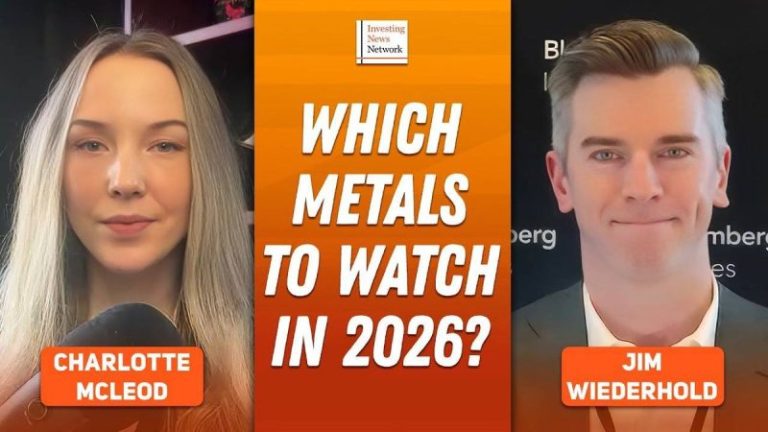
Jim Wiederhold, commodity indices product manager at Bloomberg, shares his commodities outlook for 2026, saying that while precious metals dominated last year, there’s potential for a rotation toward industrial metals like copper in the year ahead.

‘The fundamental story for industrial is very strong,’ he said.

‘There’s potential huge supply/demand imbalances coming in the future.’

Securities Disclosure: I, Charlotte McLeod, hold no direct investment interest in any company mentioned in this article.
This post appeared first on investingnews.com

~  Global Production Expansion Strengthens Hydrogen and Alternative Fuel System Manufacturing Capacity  ~

Westport Fuel Systems Inc. (‘Westport’) (TSX:WPRT Nasdaq: WPRT), a supplier of alternative fuel systems and components for the global transportation industry, announces the commencement of production at its expanded product development and manufacturing facility in Cambridge, Ontario and its new China Hydrogen Innovation Center and Manufacturing facility in Changzhou, China. Both facilities will support the development of Westport’s GFI-branded fuel system components by advancing Westport’s global hydrogen, CNG and RNG strategies and enabling local manufacturing capacity in China, a market widely cited as the largest in the world for hydrogen commercial vehicle deployment, with Chinese sales of hydrogen buses and trucks exceeding those of all other regions combined in 2024. Initial products were shipped to customers in December 2025, with both facilities continuing to ramp up capacity through the first quarter of 2026.

GFI: Leading Clean Energy Innovation
Westport’s High-Pressure Controls and Systems business (the ‘High-Pressure Business’), with its GFI products, is at the forefront of the clean energy revolution, designing, developing, and producing high-demand components for transportation and industrial applications. The High-Pressure Business specializes in designing and manufacturing safety-critical, high-pressure control components for hydrogen and alternative fuel systems, serving a variety of transportation and industrial markets. Westport’s High-Pressure Business supports automotive, truck, bus, and industrial original equipment manufacturers with GFI precision-engineered regulators, valves, and pressure relief devices for real-world duty cycles. For more information, please visit www.gficontrolsystems.com.

Global Presence and Strategic Expansion
‘Westport’s GFI-branded hydrogen fuel system components have been active globally and especially in China for over a decade, serving both fuel cell and internal combustion engine applications,’ said Dan Sceli, CEO of Westport. ‘These new and expanded facilities align with our growth strategy, enhance our capacity to meet rising global demand for natural gas and hydrogen advanced fuel technologies, and reinforce our regional manufacturing excellence to better service customers adopting high-pressure alternative fuels as a key low-emission transport solution.’     

Westport’s manufacturing expansion in China capitalizes on the nation’s prominent position in hydrogen investment and infrastructure development. The newly established facility is purpose-built to serve Westport’s existing and expanding customer base, providing essential hydrogen components for a range of applications, including commercial vehicles, buses, trains, marine, material handling, and stationary power generation. According to Driving Hydrogen, China is now the world’s largest hydrogen transportation market, achieving close to 50% of global sales in the first half of 2025 primarily due to its focus on commercial hydrogen fleets.

The China facility complements our expanded Cambridge, Ontario site for high-pressure controls. This supports Westport’s North American Innovation Hub and engineering work, improving GFI’s responsiveness and logistics.

About Westport 
Westport is a technology and innovation company connecting synergistic technologies to power a cleaner tomorrow. As a leading supplier of affordable, alternative fuel, low-emissions transportation technologies, we design, manufacture, and supply advanced components and systems that enable the transition from traditional fuels to cleaner energy solutions.

Our proven technologies support a wide range of clean fuels – including natural gas, renewable natural gas, and hydrogen – empowering OEMs and commercial transportation industries to meet performance demands, regulatory requirements, and climate targets in a cost-effective way. With decades of expertise and a commitment to engineering excellence, Westport is helping our partners achieve sustainability goals—without compromising performance or cost-efficiency – making clean, scalable transport solutions a reality.

Westport is headquartered in Vancouver, Canada. For more information, visit Westport.com.

Cautionary Note Regarding Forward Looking Statements
This press release contains forward-looking statements within the meaning of applicable securities laws, including statements regarding the commencement and ramp-up of production at Westport’s new and expanded facilities, expected manufacturing capacity, anticipated customer demand, the growth of the hydrogen and alternative fuel markets, the strategic benefits of Westport’s global expansion, and the ability of Westport’s technologies and facilities to support future commercial deployments. These forward-looking statements are based on assumptions, expectations, estimates, forecasts, and projections that, while considered reasonable by Westport management at the date of this release, are subject to a number of risks and uncertainties.

Factors that could cause actual results to differ materially from those expressed or implied by these forward-looking statements include, among others, supply chain constraints, delays in facility ramp-up, operational challenges, customer adoption rates, regulatory developments, competitive pressures, economic conditions, and other risk factors detailed from time to time in Westport’s public disclosure filing with applicable securities regulators. Readers are cautioned not to place undue reliance on any forward-looking statements. Westport undertakes no obligation to update these forward-looking statements except as required by National Instrument 51-102.

Contact Information

Investor Relations
Westport 
T: +1 604-718-2046

News Provided by GlobeNewswire via QuoteMedia

This post appeared first on investingnews.com

(TheNewswire)


Vancouver, B.C. January 19, 2026 TheNewswire – Armory Mining Corp. (CSE: ARMY) (OTC: RMRYF) (FRA: 2JS) (the ‘Company’ or ‘Armory’) a resource exploration company focused on the discovery and development of minerals critical to the energy, security and defense sectors, is pleased to provide an update on exploration activity scheduled through Q2, 2026.


Ammo Gold-Antimony Project


In December 2025 the Company announced it has engaged Castello Q Exploration Corp to carry out an initial phase one work program at its 100% owned Ammo Antimony-Gold project, located in Nova Scotia, Canada.


Ammo is 3,092-hectare exploration package that completely surrounds and is contiguous to the historical West Gore antimony-gold mine.  West Gore produced both antimony and gold in the years leading up to World War I.  The ground has since changed hands multiple times, and is currently held by Military Metals Corp.


West Gore was a significant producer during World War One, with production shipped to England.  Records document nearly 32,000 metric tons of production between 1914-1917, yielding over 7,000 metric tons of antimony concentrate grading 46%.
Total gold recovered up to 1917 was 6,861 ounces. Limited work was conducted in the 1950s, 1960s, and 1980s by several companies along with the Nova Scotia government*.


Click Image To View Full Size

Figure 1: Map showing Armory’s Ammo Project surrounding the historical West Gore antimony-gold mine


The initial work program is expected to consist of data compilation, prospecting and reconnaissance, to identify favorable geology, followed by detailed surface sampling and geophysics to determine priority drill targets. The Company plans to budget up to $656,000 CDN for the initial phase of exploration.  


Preliminary work is underway regarding data collection and analysis.  The Company will provide an update on the proposed work programs over the next few weeks.

* Source: NI 43-101 Technical Report, Battery Metals Corp, Mark S. King, P. Geo., Michael C. Corey, P. Geo., May 25, 2021


Note: The Company considers historical data at West Gore to be relevant. Readers are cautioned that the Company has not independently verified the information, and notes that the mineralization on this property may not be indicative of the mineralization on the Company’s property.


Candela II Lithium Deposit


The Company also issued an update in early December 2025, regarding its Candela II lithium brine project located in the Incahuasi Salar, Salta Province, Argentina.


The Company is moving forward on a scoping study which will enhance development of the Candela II project.  A scoping study will evaluate both technical viability and economic potential of the deposit.  The project has been advanced by the Company with exploration drilling and has an inferred resource of 457,000 tonnes of lithium carbonate in-situ. This resource estimate was completed by WSP Australia*.  


The current lithium carbonate price is up 30% since the start of the year to a new two-year high, which brings the significance of the project into focus, and priority, for Armory.


The location of the project is within what is referred to as the ‘Lithium Triangle’, a section of South America that stretches among Bolivia, Chile and Argentina. Ganfeng Lithium, China’s largest producer of the battery metal, has the adjacent concession to Candela II, and a production well approximately 9.8km away.  Rio Tinto and Power Minerals (PNN) are also located nearby.


*The Candela II Lithium Brine Project contains a National Instrument 43-101 mineral resource estimate (‘MRE’) completed by WSP Australia Pty. Ltd. (see Spey Resources Corp. news dated September 26th, 2023).   


Technical information in this news release regarding Candela II has been previously published and was reviewed and approved at the time by Phillip Thomas, BSc Geol MBM, FAusIMM (CPVal), MAIG who is a Qualified Person under the definitions established by the National Instrument 43-101.

About Armory Mining Corp

Armory Mining Corp. is a Canadian exploration company focused on minerals critical to the energy, security and defense sectors. The Company controls an 80% interest in the Candela II lithium brine project located in the Incahuasi Salar, Salta Province, Argentina. In addition, the Company controls 100% interest in both the Ammo antimony-gold project located in Nova Scotia and the Riley Creek antimony-gold project located in British Columbia.


Qualified Person


Harrison Cookenboo, Ph.D., P. Geo., an independent Qualified Person as defined by National Instrument 43-101 Standards of Disclosure for Mineral Projects, has reviewed and approved the technical contents of this news release.


Contact Information


Alex Klenman

CEO & Director

alex@armorymining.com


Neither the Canadian Securities Exchange nor its Market Regulator (as the term is defined in the policies of the Canadian Securities Exchange) accepts responsibility for the adequacy of accuracy of this news release.   This news release does not constitute an offer to sell or a solicitation of an offer to buy nor shall there be any sale of any of the Company’s securities in any jurisdiction in which such offer, solicitation or sale would be unlawful, including any of the securities in the United States of America. The Company’s securities have not been and will not be registered under the United States Securities Act of 1933, as amended (the ‘1933 Act’) or any state securities laws and may not be offered or sold within the United States or to, or for account or benefit of, U.S. Persons (as defined in Regulation S under the  1933 Act) unless registered under the  1933 Act  and applicable  state  securities  laws, or an exemption from such registration requirements is available.


Forward-looking statements:


This press release contains certain forward-looking statements, including statements regarding the intended use of funds. The words ‘expects,’ ‘anticipates,’ ‘believes,’ ‘intends,’ ‘plans,’ ‘will,’ ‘may,’ and similar expressions are intended to identify forward-looking statements. Although the Company believes that its expectations as reflected in these forward-looking statements are reasonable, such statements involve risks and uncertainties. Actual results may differ materially from those expressed or implied in these statements due to various factors, including, but not limited to, political and regulatory risks in Canada, operational and exploration risks, market conditions, and the availability of financing. Readers are cautioned not to place undue reliance on forward-looking statements, which are made as of the date of this release. The Company undertakes no obligation to publicly update or revise any forward-looking statements, whether as a result of new information, future events, or otherwise, except as required by applicable securities laws.

Copyright (c) 2026 TheNewswire – All rights reserved.

News Provided by TheNewsWire via QuoteMedia

This post appeared first on investingnews.com

Investor Insight

Sun Summit Minerals is targeting the delineation of a multi-million-ounce gold-silver resource at its flagship JD project. With strategic positioning in an emerging consolidation hotspot, compelling valuation metrics, and a track record of discovery, Sun Summit is primed to deliver substantial value creation in the coming quarters.

Overview

Sun Summit Minerals (TSXV:SMN,OTCQB:SMREF) is a Canadian mineral exploration company focused on developing its district-scale gold and copper projects in British Columbia.

The company has completed its 2025 exploration programs at the flagship JD Project and its inaugural exploration program at the Theory Project, located in the Toodoggone District.

Complementing JD and Theory is the company’s Buck project, a large, bulk-tonnage gold-silver system near Houston, BC, with an initial NI 43-101 resource estimate and significant exploration upside.

With capital in hand, a five-year exploration permit secured, and a camp established at JD, Sun Summit is executing a focused strategy to build scale, unlock resource potential and drive shareholder value. Under the leadership of its new CEO, the company has re-focused its strategy with a sharpened vision, a strengthened technical and leadership team, and a portfolio of high-quality, strategically located assets positioned to drive long-term shareholder value.

Company Highlights

  • Tiered Exploration Strategy: Sun Summit Minerals is advancing a focused portfolio in British Columbia with its flagship JD Project in the Toodoggone District as the primary discovery driver, supported by early-stage exploration at the nearby Theory Project, and complemented by the Buck Project in central BC, a strategic asset with a published mineral resource estimate.
  • Strategic Location: Sun Summit’s assets are located in well-established and mining-friendly regions of British Columbia. The flagship JD project and early-stage Theory Project are situated in the prolific Toodoggone district—home to Thesis Gold and Centerra’s Kemess Mine, while Buck lies in Central BC near the Blackwater, Huckleberry, and Equity Silver mines.
  • Potential for Multiple Expansion: Trading at approximately US$38/oz gold equivalent (EV/oz) based on Buck alone, with no value currently ascribed to the JD Project, the company represents a deep value opportunity compared to its next-door neighbour, Thesis Gold, which trades at approximately US$136/oz. Success at the drill bit from ongoing exploration at JD could support a higher valuation over time.
  • Experienced, Capital Markets-Savvy Leadership: CEO Niel Marotta brings 30 years of capital markets acumen, including experience from Fidelity and Orezone. The broader team includes senior geologists and advisors with decades of success in gold discoveries and mine development in BC.
  • Positioned for Consolidation: With majors like Freeport, Centerra, and Skeena investing heavily in adjacent properties, Sun Summit’s flagship JD Project is strategically located and advancing at the right time in the Lassonde Curve to benefit from industry-wide M&A and consolidation trends.

Key Projects

JD & Theory Projects

The JD & Theory projects span more than 25,000 hectares in the heart of the Toodoggone mining district in north-central BC, one of Canada’s most prospective belts for epithermal gold-silver and porphyry copper-gold systems. The district is home to Thesis Gold’s Ranch and Lawyers deposits (4.6 Moz gold equivalent, C$700 million market cap), Centerra’s Kemess underground development, and TDG Gold’s Shasta-Baker project. Infrastructure around the project includes hydroelectric grid access, the nearby Sturdee airstrip and all-season roads.

Results from the 2025 drill campaign at Creek Zone

The JD project hosts a 4.5 km mineralized corridor, known as Creek-Finn, with multiple underexplored targets showing evidence of both high-grade veins and broad disseminated gold systems. Historic and recent drill highlights include:

  • 2.1 grams per ton (g/t) gold over 122.5 m including 121 g/t gold over 1.5 m (CZ-24-004)
  • 11.7 g/t gold over 22 m including 61.2 g/t gold over 4 m (CZ97-008)
  • 7.3 g/t gold over 35.7 m including 215.4 g/t gold over 1 m (JD95-0472)

The Creek Zone features high-grade epithermal veins within broader disseminated zones, supported by strong IP anomalies and gold-in-soil results up to 12.2 g/t gold. The Finn Zone hosts near-surface mineralization with extensive historical drilling (~270 holes) and is open in all directions. Other targets include McClair (porphyry copper), East McClair (copper-gold skarn) and Moosehorn.

Sun Summit Minerals has completed its 2025 21-hole, 6,864 -meter drill program, successfully intersecting gold mineralization in all holes. The results have defined a northwest-trending, structurally controlled zone measuring approximately 750 meters by 300 meters and extending to a vertical depth of around 150 meters. The zone remains open both along strike and at depth, highlighting significant potential for further expansion. A five-year permit secured in April 2025 provides exploration continuity through 2030.

Sun Summit can earn 100 percent of the JD project by making staged cash/share payments and completing work commitments through 2029. Following the completion of its 2025 exploration program, the company closed an $11.5 million financing on December 23, 2025, fully funding the 2026 exploration program and strengthening its ability to advance the earn-in without near-term dilution.

Buck Project

The 100 percent owned Buck project spans 52,000 hectares and is located near key deposits, including Artemis Gold’s Blackwater (8 Moz gold), Imperial’s Huckleberry copper mine, and Newmont’s historic Equity Silver mine. Buck features near-surface bulk-tonnage gold-silver mineralization with porphyry copper-molybdenum potential at depth.

In February 2025, Sun Summit published its inaugural NI 43-101 mineral resource:

  • Indicated: 1.15 Mt @ 0.519 g/t gold equivalent (19,100 oz)
  • Inferred: 52.2 Mt @ 0.489 g/t gold equivalent (820,400 oz)

Mineralization remains open in all directions.

Buck is considered a strategic asset providing leverage to rising gold prices and future transaction potential, but currently receives minimal capital allocation as JD is prioritized.

Sun Summit can earn 100 percent of the JD project by making staged cash/share payments and completing work commitments through 2029. With ~C$6 million earmarked for the project this year alone, Sun Summit is expected to fulfill its 2025 and 2026 earn-in obligations without additional equity raises.

Management Team

Niel Marotta – Chief Executive Officer and Director

Niel Marotta has three decades of capital markets experience, including a successful tenure at Fidelity (FMRCo.), where he managed the top-performing Select Gold Fund and oversaw >$1 billion in AUM. He was previously VP at Orezone Resources, where he helped lead its C$350 million acquisition by IAMGOLD. Marotta has raised over $1 billion in financing and is driving Sun Summit’s transition from a legacy explorer to a discovery-focused value generator.

Brian Lock – Executive Chairman

A veteran of the mining industry with 40+ years of executive experience, Brian Lock has led multiple public companies, including Castle Peak Mining and Scorpio Gold. His expertise spans project development, M&A and corporate governance.

Waseem Javed – Chief Financial Officer

A seasoned mining CFO, Waseem Javed ensures disciplined capital deployment and financial controls. His experience spans junior explorers and mid-tier producers across Canada and the US.

Ken MacDonald – VP Exploration

Ken MacDonald is a registered professional geologist with over 30 years in mineral exploration and permitting in BC. Formerly with the BC Mines Branch and multiple juniors, he leads Sun Summit’s technical programs and NI 43-101 compliance.

Christopher Leslie – Technical Advisor

An expert in porphyry and epithermal systems, Christopher Leslie led the discovery of the 8 Moz Blackwater deposit while at Richfield Ventures, and later served as VP exploration for Tower Resources. He was instrumental in advancing the JD-Theory project during its prior ownership.

Robert D. Willis – Senior Advisor

Founder of several successful exploration companies, including Pioneer Metals and Manhattan Minerals, Robert Willis has 35+ years of technical and executive experience across North and South America.

Terry Salman – Strategic Advisor

Founder of Salman Partners and one of Canada’s most influential mining financiers, Terry Salman has backed dozens of successful juniors over a 40-year career in mining investment banking.

This post appeared first on investingnews.com

Investor Insight

Transition Metals offers investors exposure to discovery-driven upside across critical and precious metals through a proven project generator model, a diversified Canadian asset portfolio, and a capital-efficient strategy designed to minimize dilution while retaining meaningful discovery and monetization leverage.

Overview

Transition Metals (TSXV:XTM) is a Canada-based, multi-commodity exploration company focused on the discovery of critical and precious metals exclusively within Canada’s most prospective and stable mining jurisdictions. The company has assembled a diversified portfolio of exploration projects spanning platinum group metals, nickel, copper, gold, silver and uranium, providing broad exposure to commodities central to electrification, decarbonization and long-term resource security.

Operating under a disciplined project generator model, Transition advances early-stage assets through geoscience-driven exploration before strategically bringing in partners to participate in funding drilling and development. This approach allows the company to preserve capital, limit shareholder dilution and retain upside through royalties, milestone payments and equity interests, while maintaining operatorship and technical control during key exploration phases.

Transition’s portfolio includes flagship assets such as the Saturday Night/Sunday Lake PGM projects near Thunder Bay, the Gowganda Gold project in Ontario and the Pike Warden polymetallic system in Yukon, alongside a pipeline of additional opportunities across Ontario, British Columbia, Saskatchewan and the Northwest Territories. Led by an award-winning technical team with a proven discovery record, the company is positioned to create shareholder value through discovery, disciplined capital management and strategic asset monetization within a secure, Canada-focused footprint.

Company Highlights

  • Multi-commodity exploration company with a portfolio of projects and royalties, covering gold, nickel, copper, platinum group metals (PGM), cobalt, tungsten and more located in mining-friendly jurisdictions across Canada
  • Flagship PGM exposure at the Saturday Night/Sunday Lake projects in the Thunder Bay region
  • Discovery-focused project generator model designed to minimize shareholder dilution while maximizing exploration leverage
  • Strong treasury position complemented by marketable securities, milestone payments and royalty interests
  • Proven management team with multiple industry discovery awards and a long track record of value creation
  • Exposure to critical metals themes supported by government funding, flow-through incentives and secure jurisdictions

Key Projects

Saturday Night / Sunday Lake (Ontario)

The Saturday Night and adjacent Sunday Lake projects form one of the most compelling emerging PGM exploration stories in the Thunder Bay region. The properties are associated with early-stage Midcontinent Rift-related mafic-ultramafic intrusions, analogous in age and style to major North American PGM-Ni-Cu deposits such as Eagle (Michigan), Tamarack (Minnesota) and Thunder Bay North (Ontario). Sunday Lake hosts thick, laterally extensive zones of PGM mineralization, while drilling at Saturday Night has confirmed a large rift-related intrusion with basal PGM-Ni-Cu mineralization. Ongoing and planned drilling is focused on expanding the mineralized footprint and testing the basal contact geometry, positioning the project as a potential district-scale PGM system.

Gowganda (Ontario)

Gowganda is a 100-percent-owned, 87 sq km gold project in the historic Gowganda silver-cobalt camp, where Transition reports it made a gold discovery in 2010 less than 1 km from a paved highway. The company describes a widespread gold mineralized system over ~1.25 km of strike, with “visible gold at surface” and highlights including 97 grams per ton (g/t) gold over 40 cm (channel sample) and drill highlights including 2.4 g/t gold over 7.1 m and 82.5 g/t gold over 0.4 m (within 35 m of surface).

Dessert Lake (Northwest Territories)

Dessert Lake is a strategic uranium exploration opportunity in a large, underexplored basin that shares geological similarities with the Athabasca Basin, which hosts a significant portion of the world’s high-grade uranium deposits. Transition holds the exclusive right to stake claims and is seeking a partner to advance the district-scale opportunity, noting prospective settings along the Wopmay fault and along the basal unconformity/crustal fault intersections.

Pike Warden (Yukon)

Pike Warden is a large polymetallic project situated on the northern margin of the Bennett Lake Caldera, one of the largest collapsed caldera complexes in Canada. Pike Warden is an emerging epithermal gold-silver/porphyry copper system near the Yukon–BC border, ~70 km southwest of Whitehorse, where Transition retains the option to earn 100% of the 41 sq km property. Transition reports 25+ zones of gold-silver-copper-molybdenum-lead mineralization identified to date and sampling highlights up to 48.1 g/t gold, 11,270 g/t silver, 7.49 percent copper, 2.37 percent molybdenum and 59.6 percent lead, with recent work and targeting supported by geophysics and systematic sampling.

Jolly (Ontario)

Jolly Gold is a large, 100-percent-owned and optioned land package covering the western extension of the Beardmore–Geraldton greenstone belt, with multiple undrilled occurrences of high-grade gold mineralization. The company highlights major and splay structures intersecting favourable stratigraphy, describing the target as a camp-scale exploration opportunity.

Cryderman (Ontario)

Cryderman is a gold project in the Shining Tree West camp located along the Ridout Deformation Zone and sits 55 km east of IAMGOLS’s Côté gold project and 16 km west of Aris Gold’s Juby gold project. It is a gold-mineralized system over ~500 m of strike hosted in N–S trending, multi-phase quartz-carbonate veins. The company reports channel sample highlights including 9.15 g/t gold over 1.07 m (with additional high-grade sub-intervals).

Maude Lake (Ontario)

The Maud Lake project is a high-tenor nickel-copper-cobalt-PGM magmatic sulphide system located ~10 km north of Schreiber, Ontario. Transition reports surface sampling up to 6.23 percent nickel, 0.719 percent copper, 0.085 percent cobalt, and 1.042 g/t PGM (platinum+palladium+gold), and notes drilling that intersected a semi-continuous zone of magmatic sulphides near the base of a gabbroic intrusion including 20.01 m averaging 0.33 percent nickel and 0.28 percent copper (including 4 m averaging 0.61 percent nickel and 0.52 percent copper).

Homathko (British Columbia)

Homathko is a high-grade, drill-ready gold prospect exposed by receding glaciers in British Columbia, with an interpreted lode gold system traced along ~1.5 km of strike and grab sample highlights up to 87 g/t gold.

Island Copper (Ontario)

Island Copper is an IOCG (iron oxide copper-gold) opportunity north of Sault Ste. Marie, Ontario, with Transition reporting two separate mineralized showings along Highway 556. Recent samples and historical drill holes returned values up to 9 percent copper.

Wollaston (Saskatchewan)

Wollaston Copper is a >30 sq km property in north-central Saskatchewan south of the Athabasca Basin, where Transition describes two sediment-hosted base metal target opportunities. The company cites historic drilling by Noranda (1990) including 10.82 m grading 0.25 percent copper and 7.4 m grading 0.49 percent copper (both within 40 m of surface), and a separate zinc showing with 17.0 m grading 2.52 percent zinc and 4.0 m grading 7.18 percent zinc, within the Wollaston Supergroup.

Pipestone (Ontario)

Pipestone is a 33 sq km gold project in the Porcupine camp ~25 km north of Timmins, covering ~13 km of interpreted strike extension of the Pipestone structure (one of two main structural breaks recognized in the Timmins camp). The property is subject to a participating joint venture with Gowest Gold, with provisions for dilution to a 2 percent NSR (with a 1 percent buyback for $1 million).

Bancroft (Ontario)

Bancroft is a southern Ontario nickel-coper-cobalt-PGM greenfield land package that has benefited from ~$5 million in exploration expenditures and includes drilling intersections of 5.05 m averaging 1.98 g/t PGM and 60 m of 1.34 g/t PGM. It comprises 2,789 hectares of mining claims and is located less than a 2-hour drive from Toronto.

Management Team

Scott McLean – President, CEO and Co-founder

Scott McLean has over 30 years of experience in mineral exploration and corporate leadership. He spent 23 years with Falconbridge Limited where he was involved in the discovery of the Nickel Rim South deposit in Sudbury, Ontario. For this work, he was named Prospector of the Year (2004) by the Prospectors & Developers Association of Canada. McLean is responsible for corporate vision, capital structure, governance and investor relations, and also serves as an executive director of SPC Nickel Corp.

Greg Collins – Chief Operating Officer and Co-founder

Greg Collins is a professional geologist with more than 25 years of experience across gold and base metals exploration, resource estimation, mine planning, operations and management. His career spans Canada and international jurisdictions. Collins is a founding partner and COO of Transition Metals and is also CEO of Canadian Gold Miner.

Carmelo Marrelli – Chief Financial Officer

Carmelo Marrelli is a chartered professional accountant and principal of The Marrelli Group of Companies. He acts as CFO for a number of public issuers on the TSX, TSX Venture Exchange and CSE, bringing financial, governance and regulatory expertise. Marrelli holds a Bachelor of Commerce degree from the University of Toronto and is a member of the Institute of Chartered Secretaries and Administrators.

Bill Stormont – Business Development

Bill Stormont is a capital markets executive with experience in institutional equity (buy-side, sell-side and fund management), investor relations and stakeholder engagement. He has served in equity analyst and institutional sales roles, worked as a European equity fund manager, and supports business development, partnerships and strategic communications for Transition Metals. Stormont holds an MBA from the University of British Columbia.

Tom Hart – Chief Geologist

Tom Hart is an award-winning geologist with over 40 years of exploration experience across government and industry, including Inco and the Ontario Geological Survey. He specializes in lode gold and base metal systems and has expertise in soil, till and rock analytical methods. Hart was co-recipient of the Northwestern Ontario Prospectors Association’s Discovery of the Year Award (2004).

Benjamin Williams – Exploration Manager Geologist

Benjamin Williams has more than 10 years of geological experience and has been with Transition Metals since 2018. He obtained a BSc with Honours in Geology from Saint Mary;s University, Halifax, followed by Graduate work at Carleton University in Ottawa, where his work focused on igneous petrology and isotope geochemistry. Prior to joining Transition Metals, Mr. Williams worked in collaboration with the Northwest Territories Geological Survey, as a Senior Mapping and Research Assistant, where he conducted various value-added mapping and isotopic research programs on Neoarchean volcanic belts within the Slave Craton, with a focus on VMS-style mineralization.

Sarah Reese – Project Geologist

Sarah Reese is a geological engineer with a Bachelor of Applied Science in Geological Engineering from Queen’s University. She contributes to field programs and geological interpretation, while developing her professional expertise through ongoing education and field experience.

This post appeared first on investingnews.com

The Government of Ontario, Canada, announced on Tuesday (January 13) that it was accelerating permitting and development on Canada Nickel Company’s (TSXV:CNC,OTCQX:CNIKF) Crawford nickel project near Timmins, as part of its “One Project, One Process” framework.

The designation will help the project attract C$5 billion in investment funding to develop the mine and a nickel processing plant that will provide materials for the stainless steel and electric vehicle markets.

Once complete, the mine will create 1,300 jobs and support an additional 3,000 workers throughout the community and supply chain.

On the international stage, Canadian representatives, including Prime Minister Mark Carney, travelled to China this week for a four-day visit in hopes of improving relations between the two countries.

Among the results of the visit was a softening of tariffs on Chinese electric vehicles entering Canada. Under the new terms, Chinese companies will be allowed to sell up to 49,000 automobiles per year in Canada at a 6.1 percent tariff. In exchange, China has loosened its tariffs on Canadian canola to 15 percent, and removed all tariffs on canola meal, lobsters, crab and peas.

Additionally, the Canadian government announced on Friday (January 16) that it had reaffirmed a memorandum of understanding with China’s National Energy Administration. The MoU sees both countries strengthen cooperation over energy initiatives and advance dialogue over the energy transition; conventional, clean and nuclear energy; and uranium resources.

South of the border, on Sunday (January 11) US Federal Reserve Chair Jerome Powell issued a rare statement on his relationship with the Trump administration when he revealed that he had received subpoenas from the Department of Justice.

According to his remarks, US Attorney and Trump appointee Jeanine Pirro had opened an investigation into Powell’s oversight of the Federal Reserve’s building renovation project.

Although no charges have been laid, the investigation illustrates a deepening rift between the Fed Chairman and the Trump administration. Powell said he believes the investigation is related to the administration’s frustration over what it claims is a slow pace of interest rate cuts.

The president has previously stated his desire to replace Powell as the Fed’s chair, but because the Fed is independent, he can only do so with the support of Congress. While Powell’s term as chairman ends in May, his term as a Fed governor doesn’t end until January 2028, which may stymie Trump’s plan to gain greater control over the agency and its policy direction.

For more on what’s moving markets this week, check out our top market news round-up.

Markets and commodities react

Canadian equity markets were on the rise this week.

The S&P/TSX Composite Index (INDEXTSI:OSPTX) gained 1.8 percent over the week to close Friday at 33,040.55, while the S&P/TSX Venture Composite Index (INDEXTSI:JX) fared even better, rising 4.28 percent to 1,091.13. The CSE Composite Index (CSE:CSECOMP) also gained ground, rising 2.61 percent to close at 188.29.

The gold price continued to trade at all-time highs this week, reaching US$4,639 per ounce amid heightened tensions in the Middle East over protests in Iran and as the US contemplated military involvement. Overall, it gained 2.32 percent during the week, closing the week at US$4,582.81 per ounce on Friday at 4:00 p.m. EST.

The silver price performed even stronger, trading above US$93 per ounce on Wednesday at new highs. Although the price pulled back slightly by the end of the week, it still posted a weekly gain of 16.08 percent, closing Friday at US$89.36.

In base metals, the Comex copper price recorded a 2 percent drop this week to US$5.88.

The S&P Goldman Sachs Commodities Index (INDEXSP:SPGSCI) rose 1.45 percent to end Friday at 562.91.

Top Canadian mining stocks this week

How did mining stocks perform against this backdrop?

Take a look at this week’s five best-performing Canadian mining stocks below.

Stocks data for this article was retrieved at 4:00 p.m. EST on Friday using TradingView’s stock screener. Only companies trading on the TSX, TSXV and CSE with market caps greater than C$10 million are included. Mineral companies within the non-energy minerals, energy minerals, process industry and producer manufacturing sectors were considered.

1. Homeland Nickel (TSXV:SHL)

Weekly gain: 135.71 percent
Market cap: C$65.57 million
Share price: C$0.33

Homeland Nickel has a portfolio of nickel projects in Oregon, US: Red Flat, Cleopatra, Eight Dollar Mountain and Shamrock.

In addition, the company holds investments in mining companies with nickel projects, including Benton Resources (TSXV:BEX,OTCPL:BNTRF), Canada Nickel Company and Noble Mineral Exploration (TSXV:NOB,OTCQB:NLPXF).

Shares in Homeland surged this week following news on Tuesday that Canada Nickel’s Crawford project in Ontario was selected for the province’s “One Project, One Process” review framework, which will allow for an accelerated timetable for permitting and development of the asset.

Canada Nickel is Homeland’s top investment, holding 742,095 shares valued at C$1.08 million.

Homeland did not release news of its own this week, but its share price has also been supported by rising nickel prices, which climbed from a low of US$14,255 per metric ton in the middle of December to as high as US$18,785 on Wednesday.

2. Eskay Mining (TSXV:ESK)

Weekly gain: 89.66 percent
Market cap: C$108.21 million
Share price: C$0.55

Eskay Mining is an exploration company advancing its namesake project in the Golden Triangle region of British Columbia, Canada.

The property located in the province’s northwest sits on a land package of 130,000 acres, and hosts several gold and silver volcanogenic massive sulfide and magmatic nickel, copper and platinum group metals targets.

Final assay results from its summer 2025 sampling program at the site were released on November 7. The company said the batch consisted of 121 rock chip and channel samples, with 11 returning grades over 20 g/t gold and 31 with grades over 1 g/t.

At the time, the company said mineralization bears similarities to discoveries at Goliath Resources’ (TSXV:GOT,OTCQB:GOTRF) Surebet and Juggernaut Exploration’s (TSXV:JUGR,OTCPL:JUGRF) Big One projects. Eskay added that it can see a path to a maiden drill program in 2026.

The most recent news from Eskay came on Monday when it announced that Clinton Smyth had been hired as the company’s chief geologist for its 2026 exploration program. Smyth has spent 25 years in the industry working for Anglo American (LSE:AAL,OTCQX:NGLOY) and Minorco.

3. Batero Gold (TSXV:BAT)

Weekly gain: 86.36 percent
Market cap: C$23.61 million
Share price: C$0.205

Batero Gold is an exploration company focused on advancing its Quinchia project in the Department of Risaralda, Colombia.

The property is composed of one tenement covering 1,407 hectares, with an additional 155 hectare concession under application. A September 2022 mineral resource estimate was included in its management discussion and analysis for the year ending August 2025.

Across three zones, the project’s La Cumbre deposit hosts a contained measured and indicated resource of 2.2 million ounces of gold and 6.43 million ounces of silver from 51.73 million metric tons of ore with average grades of 0.5 g/t gold and 1.47 g/t silver.

The company has not released news in the past week, but its share price has surged amid significant gains in precious metals prices since the start of 2026.

4. Auric Minerals (CSE:AUMC)

Weekly gain: 82.14 percent
Market cap: C$11.22 million
Share price: C$0.51

Auric Minerals is a uranium exploration company focused on its Route 500 and Bub properties in Newfoundland and Labrador, Canada.

The projects are both located in Labrador’s Central Mineral Belt, with Route 500 consisting of 441 mineral claims across 11,025 hectares and Bub consisting of 318 claims across 7,949 hectares.

The more advanced Route 500 project hosts surface showings with high-grade uranium mineralization, while Bub includes strong radiometric anomalies covering 30 square kilometers and 20 square kilometers.

Auric announced on December 31 that it had acquired a 100 percent interest in the English Lake, Otter Lake and Kan projects, all located in Labrador, in exchange for 22 million common shares at C$0.315 per share, 8 million warrants, cash payments of C$32,000 and a 2.5 percent net smelter return.

According to the same release, the company also amended its option agreements for the Route 500, Bub and Portage properties deal to waive its additional obligations, including future cash payments, share issuances, and exploration expenditures, in exchange for 500,000 shares to each of the optioners for a total of 1.5 million shares.

On January 8, Auric officially acquired 100 percent of the three properties after issuing the shares.

5. Patagonia Gold (TSXV:PGDC)

Weekly gain: 80.22 percent
Market cap: C$432.5 million
Share price: C$0.82

Patagonia Gold is a precious metals production and development company primarily focused on advancing its Cap-Oeste and Calcatreu underground projects in Argentina.

Located in Santa Cruz province, Cap-Oeste hosted open-pit mining operations until 2018. While Patagonia is working on the exploration and development of the underground resource at the site, it has been able to recover gold and silver from residual leaching on site.

According to the company’s website, a 2018 mineral resource estimate for Cap-Oeste reported measured and indicated values of 704,300 ounces of gold and 21.43 million ounces of silver from 10.56 million metric tons of ore with average grades of 2.07 grams per metric ton (g/t) gold and 63.2 g/t silver.

Its Calcatreu project, located in the Rio Negro province, is currently under construction. Calcatreu hosts a measured and indicated resource of 669,000 ounces of gold and 6.28 million ounces of silver from 9.84 million metric tons of ore, with average grades of 2.11 g/t gold and 19.8 g/t silver.

The most recent news from the company came on Thursday when it provided an update on construction activities at Calcatreu, which it has resumed following a holiday break.

In the announcement, Patagonia said it has extracted and stockpiled 40,000 metric tons of mineralized material from the Veta 49 pit. Of the material, the company said that 5,200 metric tons are expected to be stacked on the leach pad following electric leak detection tests later in January.

Additionally, Patagonia expects the carbon-in-column circuit construction will also be completed in January. After stockpiled material begins being leached and processed, the metal doré product will be sent to Canada to be refined in Ontario.

Patagonia expects to release an updated technical report for the project during the second quarter of the year.

FAQs for Canadian mining stocks

What is the difference between the TSX and TSXV?

The TSX, or Toronto Stock Exchange, is used by senior companies with larger market caps, and the TSXV, or TSX Venture Exchange, is used by smaller-cap companies. Companies listed on the TSXV can graduate to the senior exchange.

How many mining companies are listed on the TSX and TSXV?

As of May 2025, there were 1,565 companies listed on the TSXV, 910 of which were mining companies. Comparatively, the TSX was home to 1,899 companies, with 181 of those being mining companies.

Together, the TSX and TSXV host around 40 percent of the world’s public mining companies.

How much does it cost to list on the TSXV?

There are a variety of different fees that companies must pay to list on the TSXV, and according to the exchange, they can vary based on the transaction’s nature and complexity. The listing fee alone will most likely cost between C$10,000 to C$70,000. Accounting and auditing fees could rack up between C$25,000 and C$100,000, while legal fees are expected to be over C$75,000 and an underwriters’ commission may hit up to 12 percent.

The exchange lists a handful of other fees and expenses companies can expect, including but not limited to security commission and transfer agency fees, investor relations costs and director and officer liability insurance.

These are all just for the initial listing, of course. There are ongoing expenses once companies are trading, such as sustaining fees and additional listing fees, plus the costs associated with filing regular reports.

How do you trade on the TSXV?

Investors can trade on the TSXV the way they would trade stocks on any exchange. This means they can use a stock broker or an individual investment account to buy and sell shares of TSXV-listed companies during the exchange’s trading hours.

Article by Dean Belder; FAQs by Lauren Kelly.

Securities Disclosure: I, Dean Belder, hold no direct investment interest in any company mentioned in this article.
Securities Disclosure: I, Lauren Kelly, hold no direct investment interest in any company mentioned in this article.
This post appeared first on investingnews.com